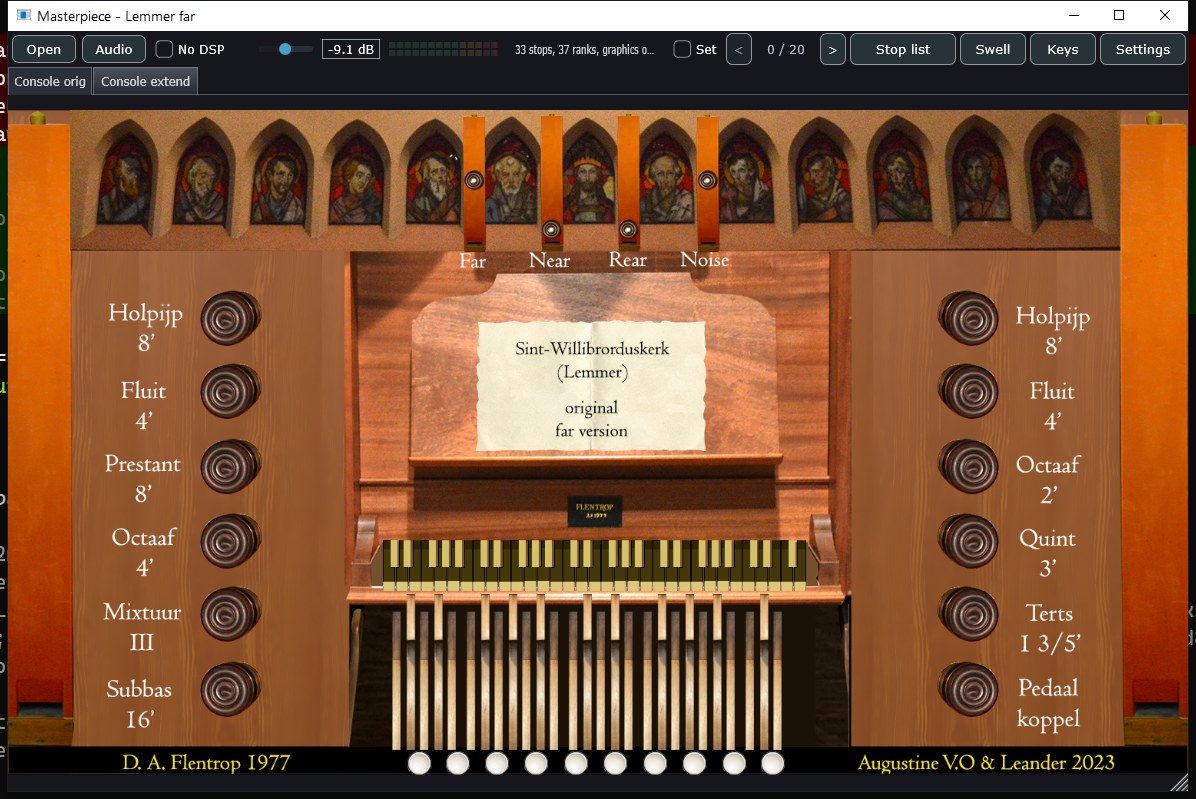
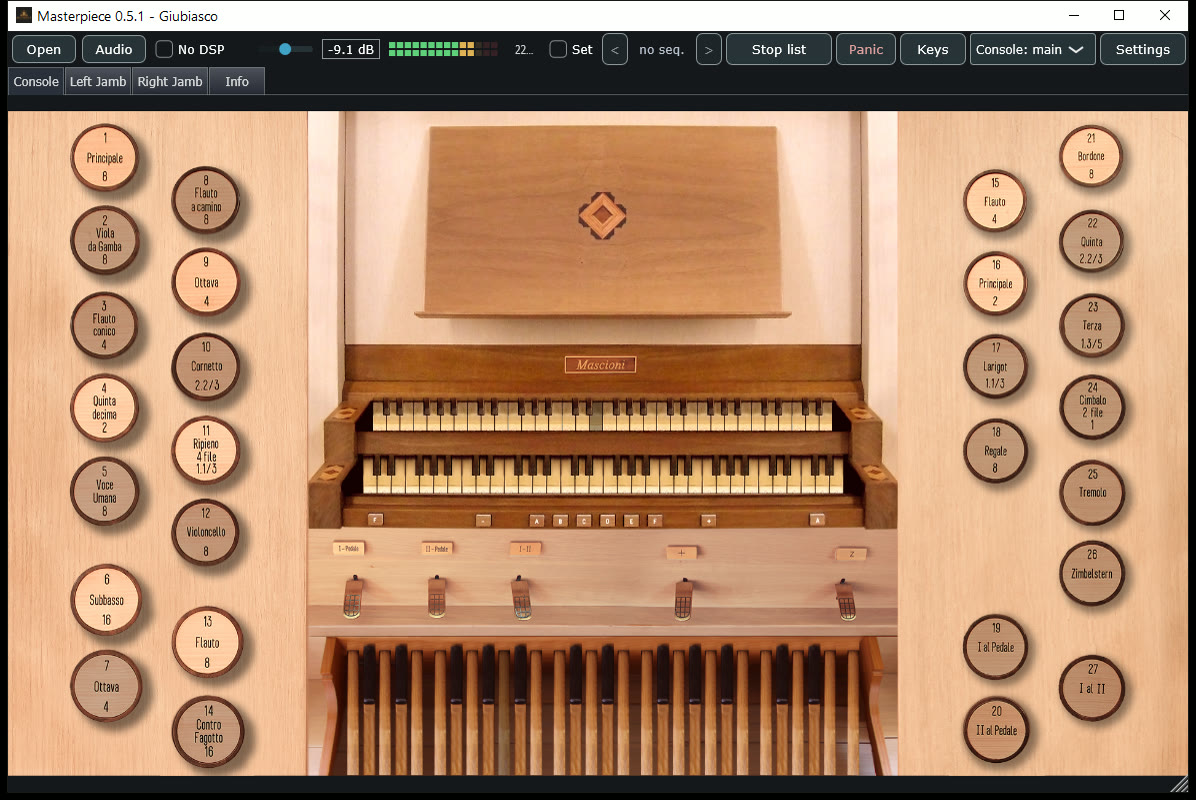
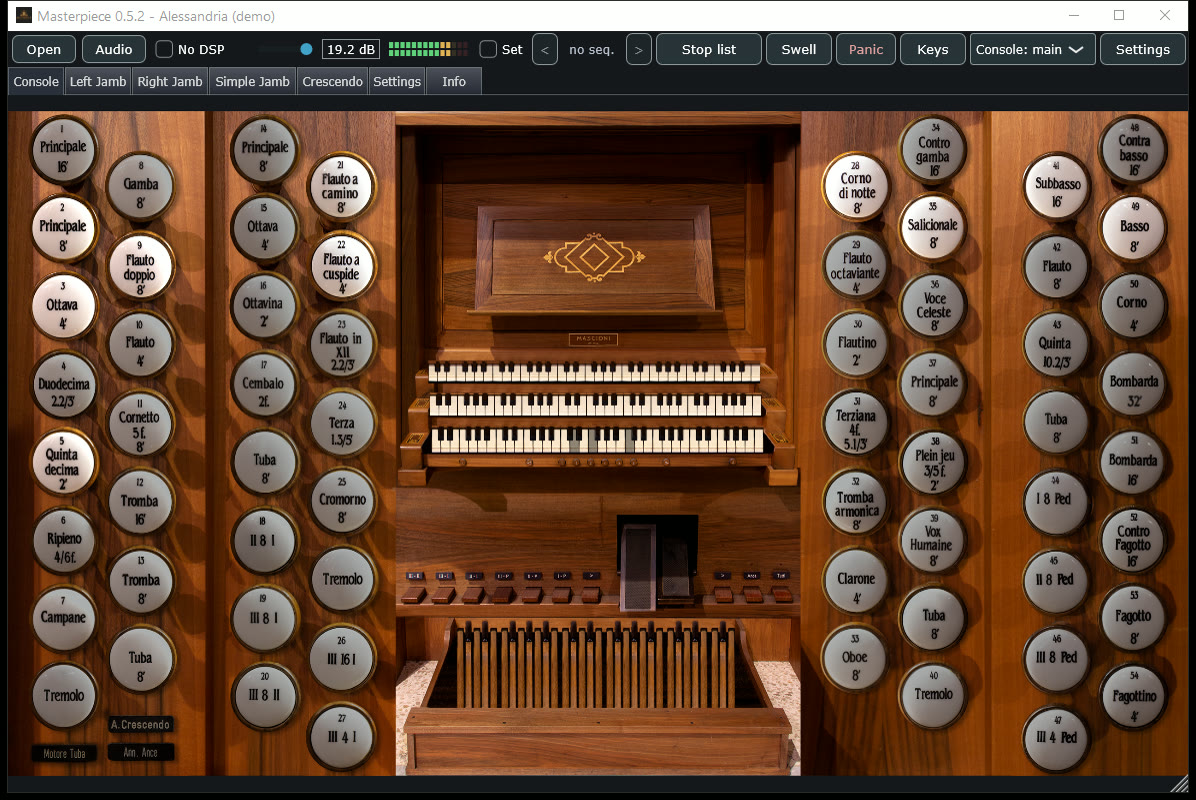
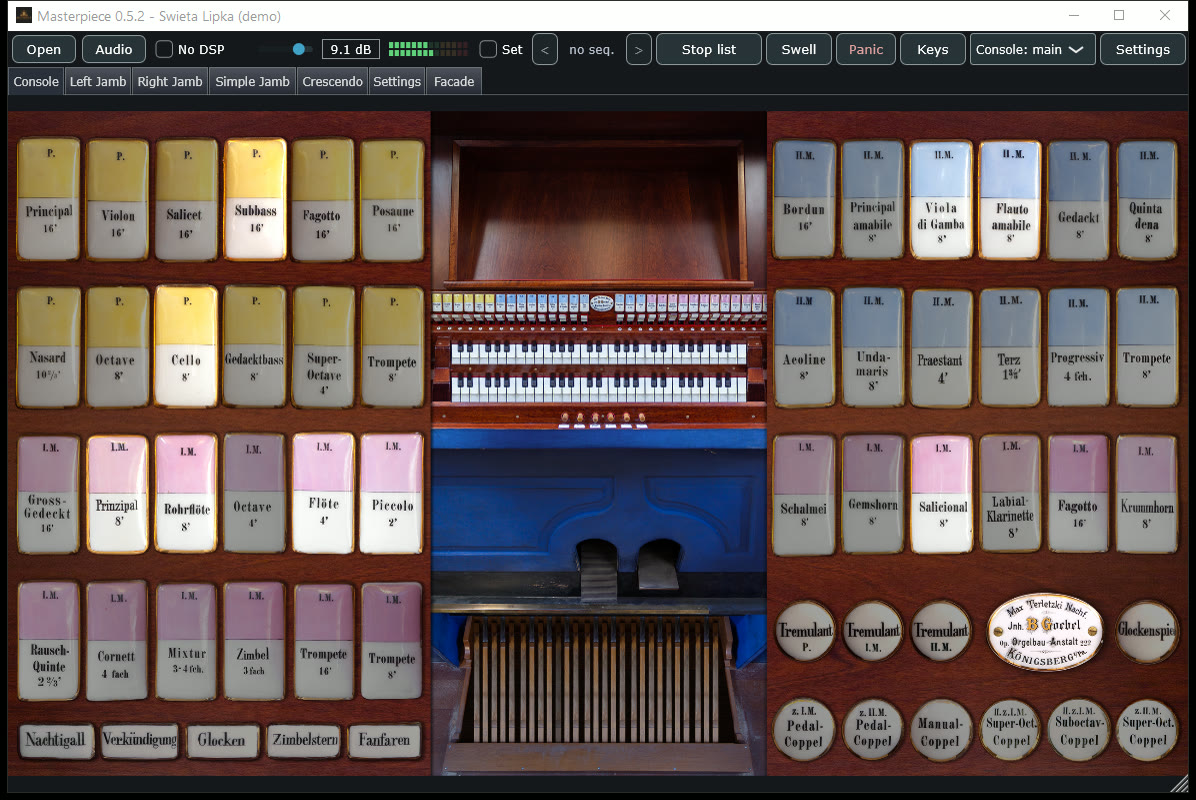
A cross-platform pipe organ sample player that reads Hauptwerk and GrandOrgue sample sets, builds the instrument’s own console out of the set’s definition — artwork, drawstops, keyboards, pedalboard — and plays it.
Standalone application, VST3, LV2, and Audio Unit on macOS — the same engine either way. Windows, macOS, Linux, and Raspberry Pi. An independent GPL-3.0-only implementation; it is not a fork.
Download — version 0.7.1
Portable archives for every platform, the plugins on their own, and the Android and iOS builds are on the releases page.
Hear it
Thirty-three works on nine organs, 17 minutes, recorded from the application’s own audio output. The consoles animate because a MIDI note takes the same path through the instrument that a physical console would drive.
Programme, sequencers and sample library producers: attribution page.
New tested instruments
The second recording: the sample sets tested for release 0.5, two works each, chosen for the instrument. Thirty works on fifteen organs, 12 minutes, filmed from the running console with the audio taken from the application’s own output.
Programme and credits: its own attribution page.
What it is
A sampled pipe organ is distributed as a large library: a recording of every pipe of a real instrument — attack, a loopable stretch of steady tone, and one or more releases with the building’s reverberation dying away — plus a definition describing the instrument around them. Which pipes each stop owns, what the couplers and pistons do, how the console is drawn, how the wind and the swell box behave.
Masterpiece reads those libraries and turns them back into a playable instrument. It reads unencrypted Hauptwerk-format sets directly, so existing libraries transfer without conversion; copy-protected .hbw/.hbx sets are reported, not played, and stay locked to the program they were encrypted for. GrandOrgue .organ sets load too, translated as they load into the same kind of definition, console included. A set can also be played straight from the packages it ships in — RAR archives or GrandOrgue .orgue packages — without unpacking it.
Why it matters on a Pi
The differentiator is resource use. Attacks and sustain loops stay resident while release tails stream from disk into per-voice ring buffers, with 24-bit bit-exact, 16-bit and mono-folding options plus a decoded sample cache.
Measured on Friesach — 44 stops, 17 GB, 12,148 files:
| Mode | RAM | Open time |
|---|---|---|
| 32-bit float, fully resident | 21.6 GB | 77 s |
| 24-bit, bit-exact | 16.2 GB | — |
| 16-bit stereo, releases streamed | 4.65 GB | — |
| 16-bit mono-folded, releases streamed | 2.33 GB | 26 s |
Up to 9.3x less memory and 3x faster loading. Streaming assumes SSD-class storage. Method and full figures: PERFORMANCE.md.
Using it
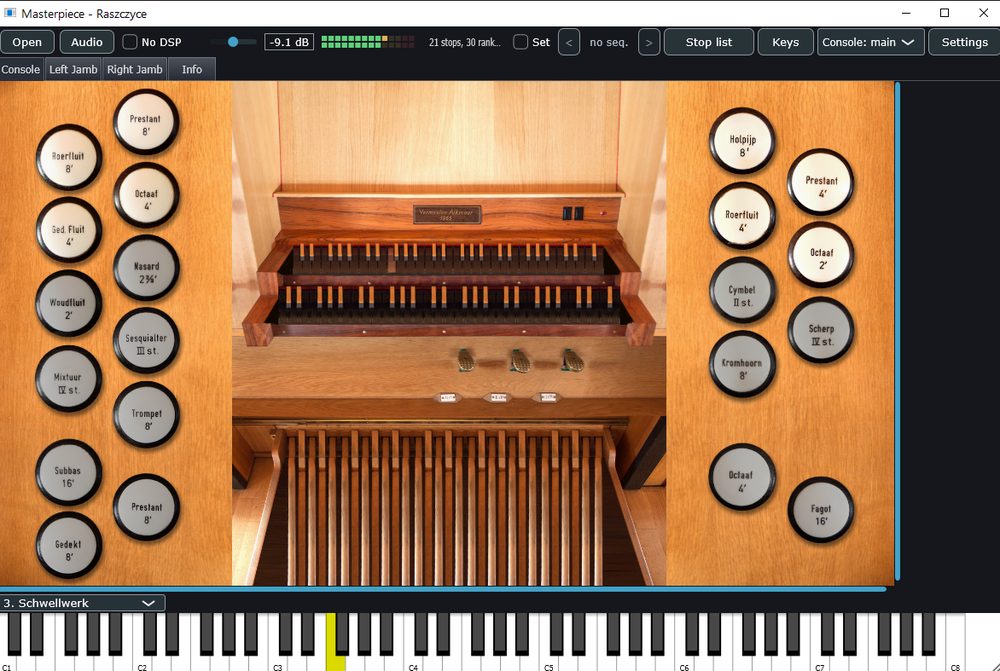
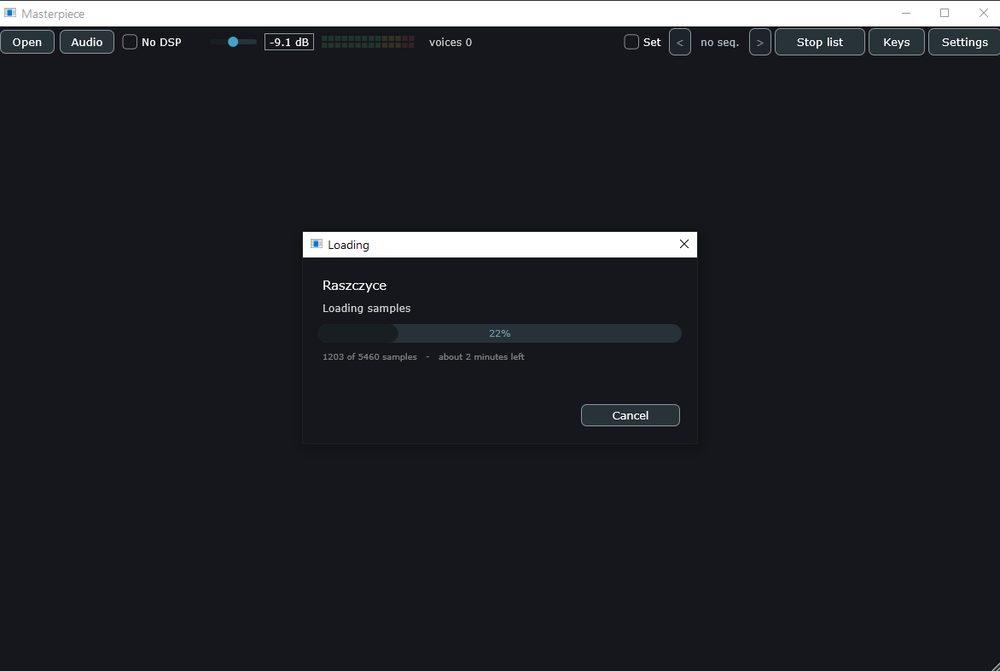
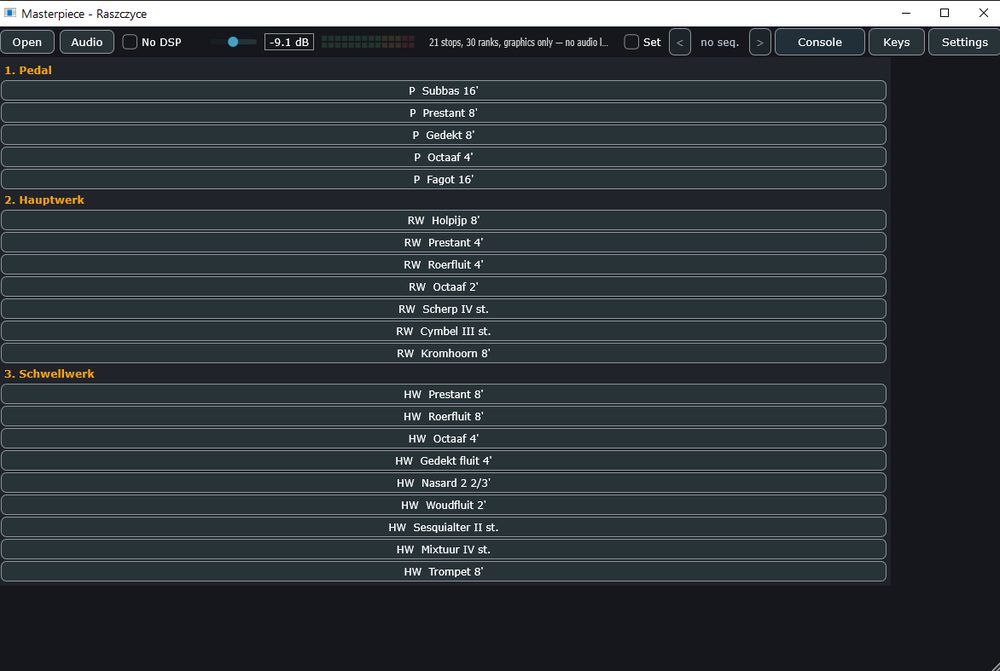
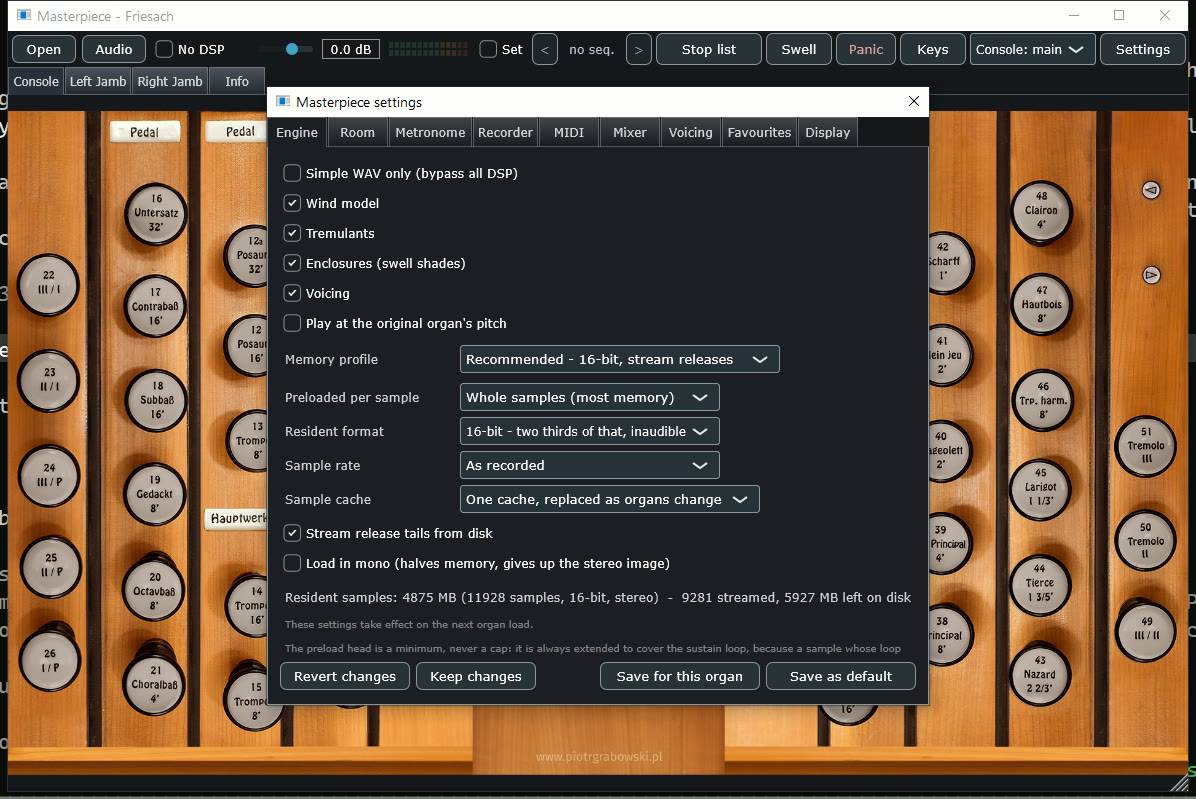
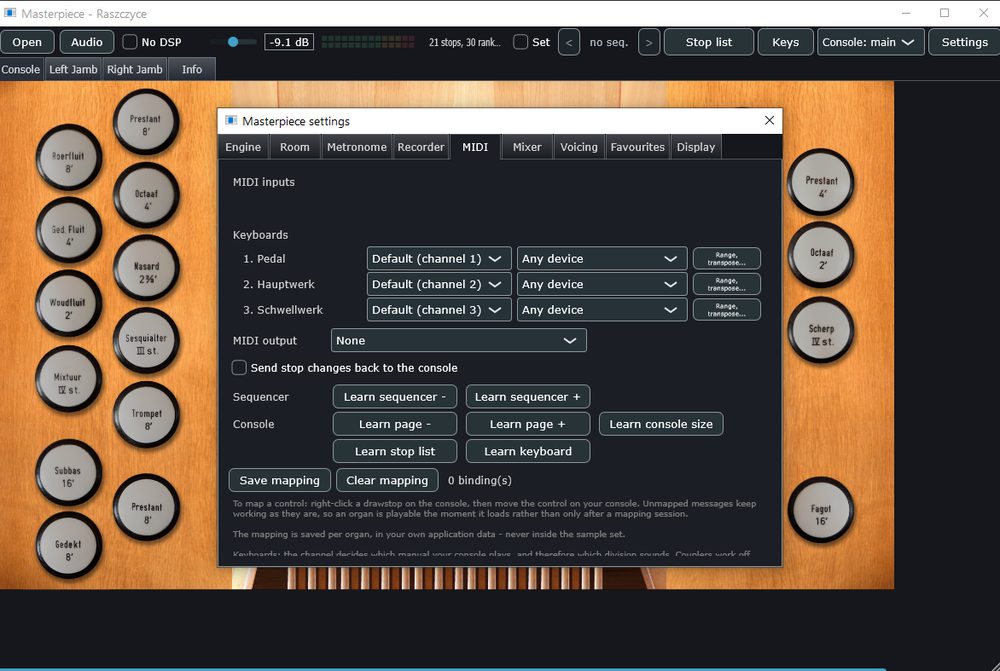
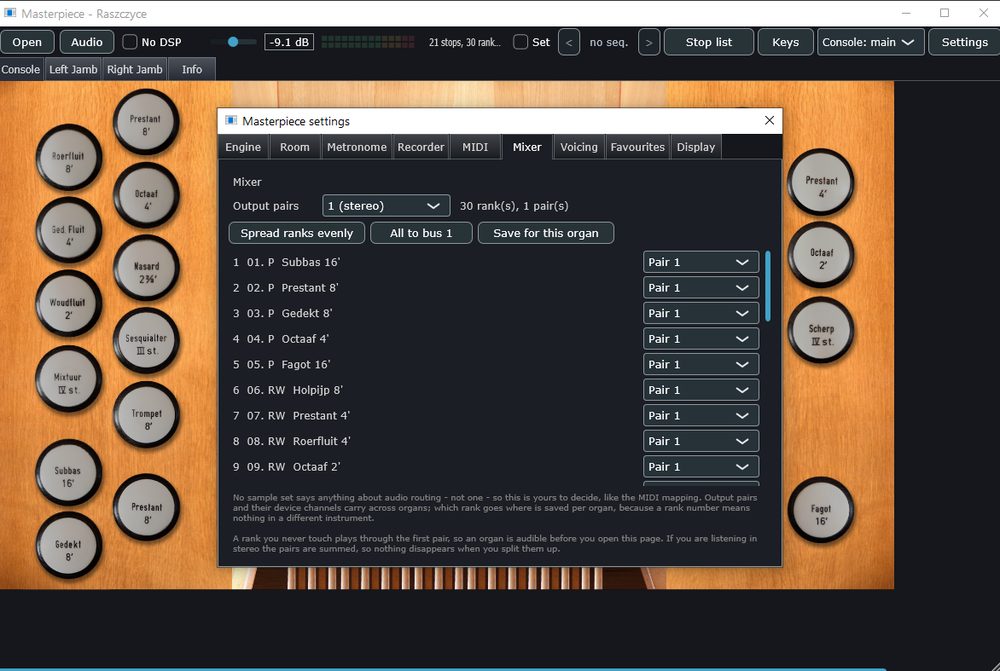
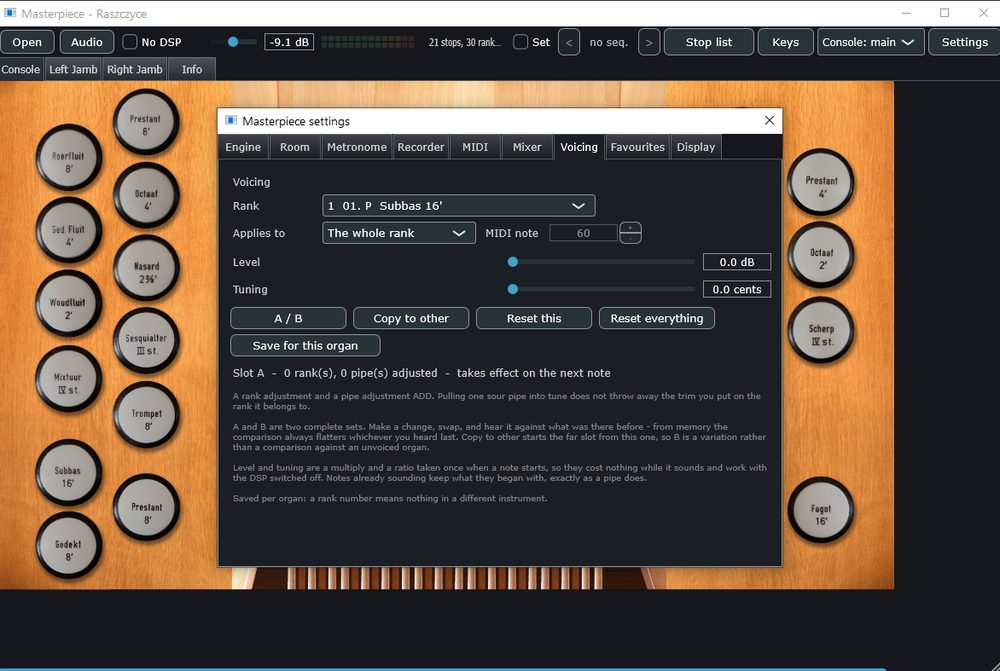
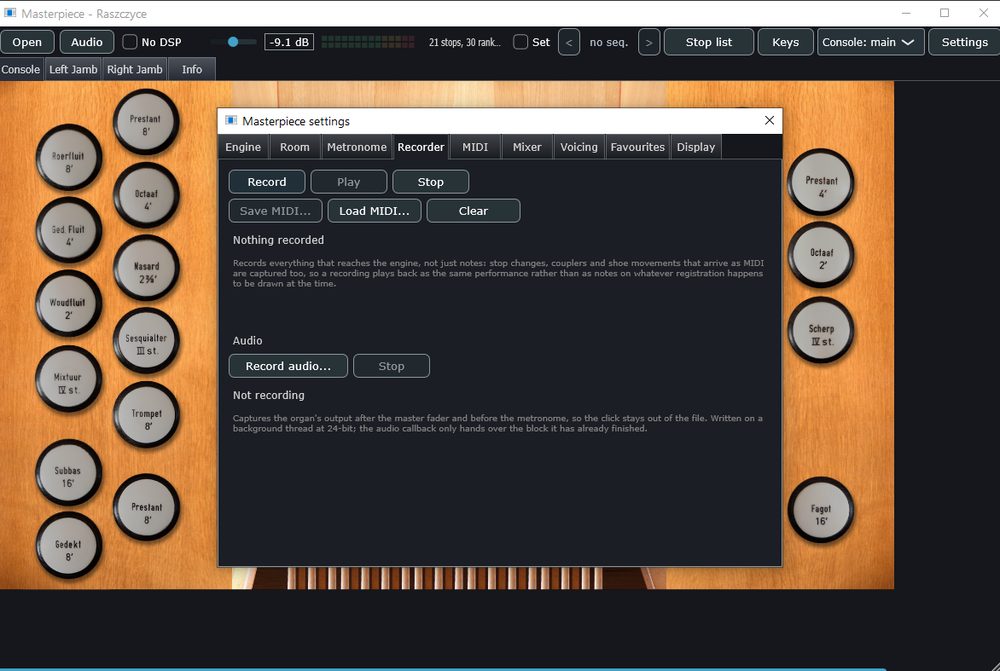
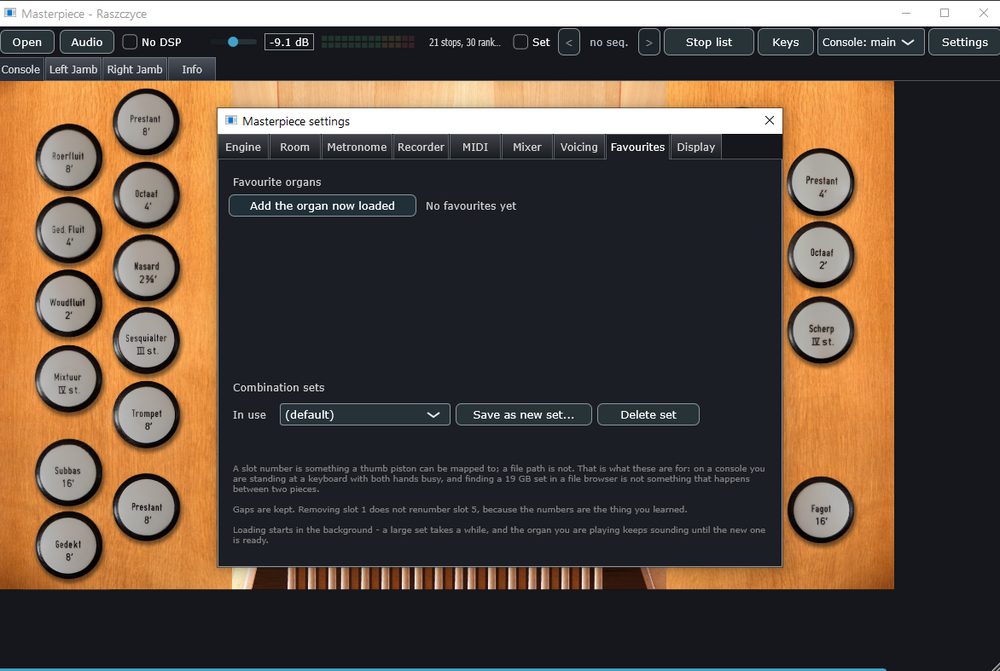
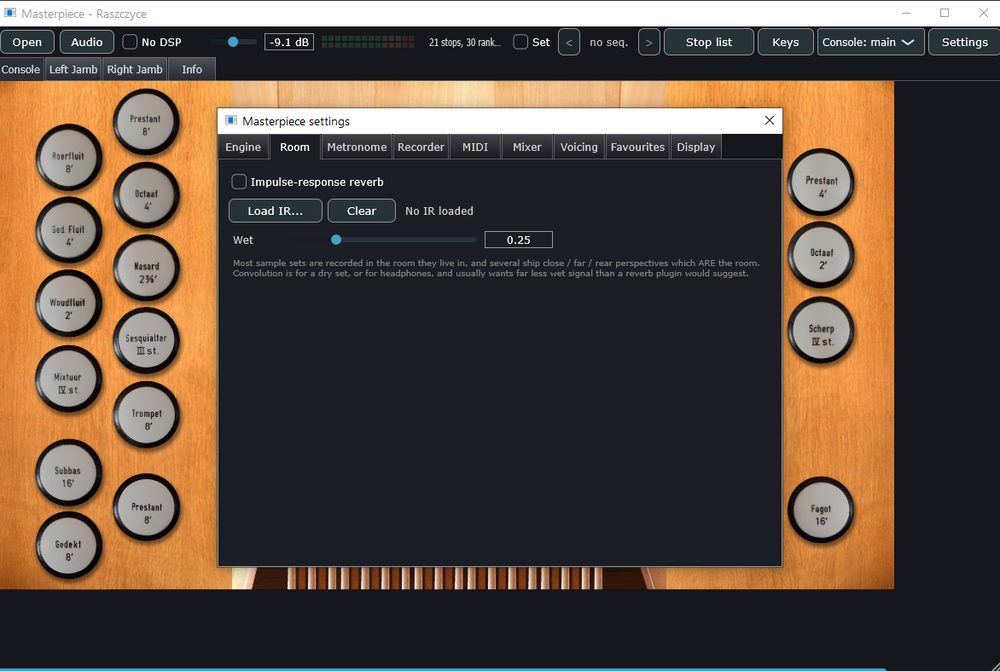
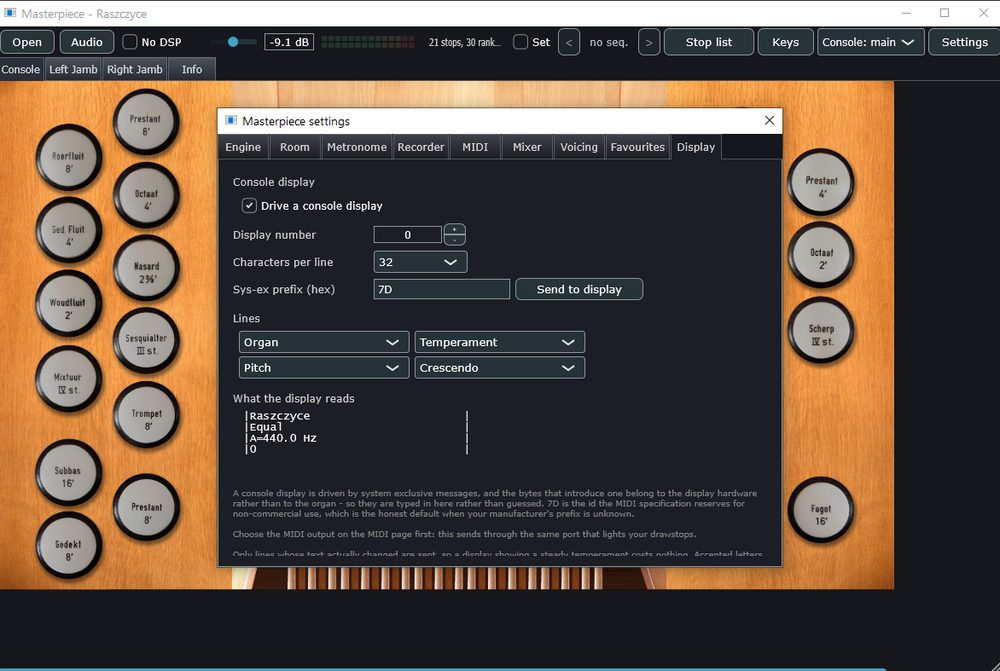
Every organ gets its own Combinations window: generals in rows of ten, divisionals with their own cancel for every manual and the pedal, a stepper with up to 999 frames, Set and General Cancel. A piston that was never set does nothing, and only the registration is captured — stops, couplers and tremulants, never the blower or a noise. The organ’s own pistons keep working beside these. Right-click any piston to map it to a button on your console.
Tuning holds the three things a player changes between pieces: temperament (the organ’s own, Werckmeister III, Kirnberger III, Vallotti, Young II, quarter-comma meantone, Pythagorean, Silbermann’s sixth-comma, equal, or a Scala .scl file), pitch in Hz with 415, 440 and 442 a click away, and a transposer that moves the keys rather than the samples.
Supported instruments
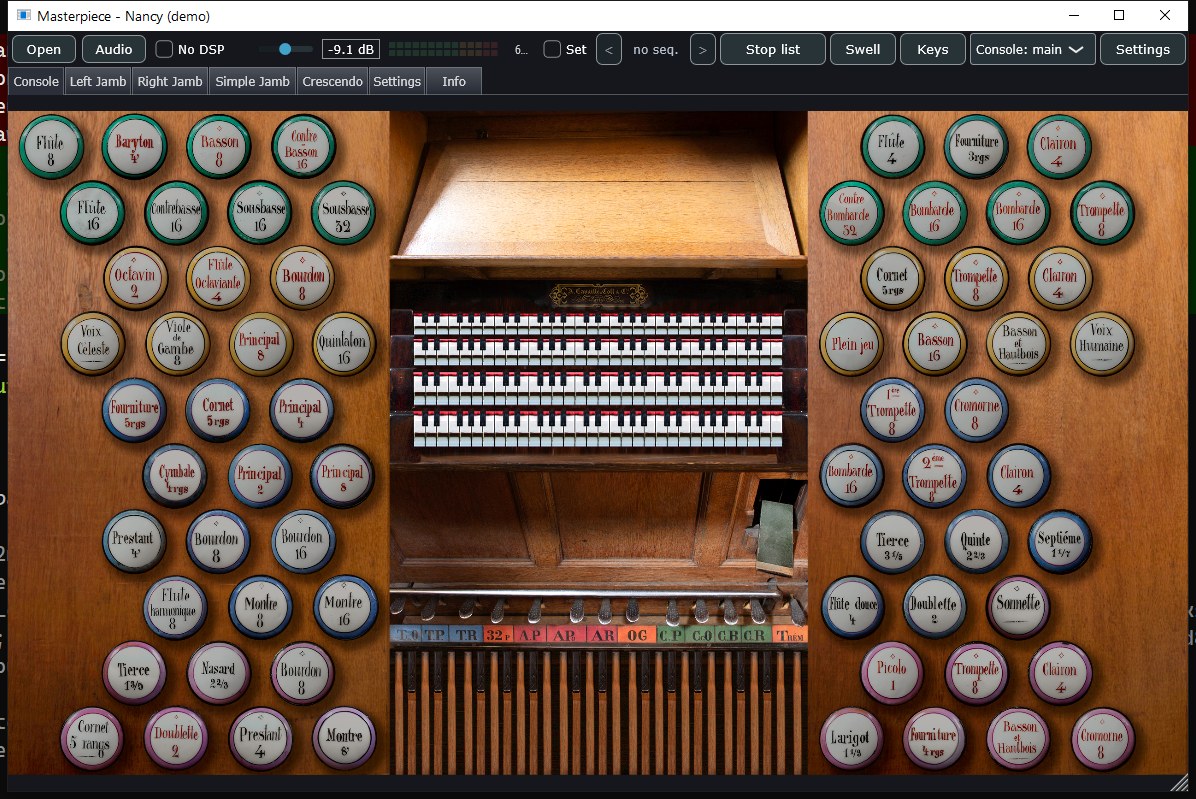
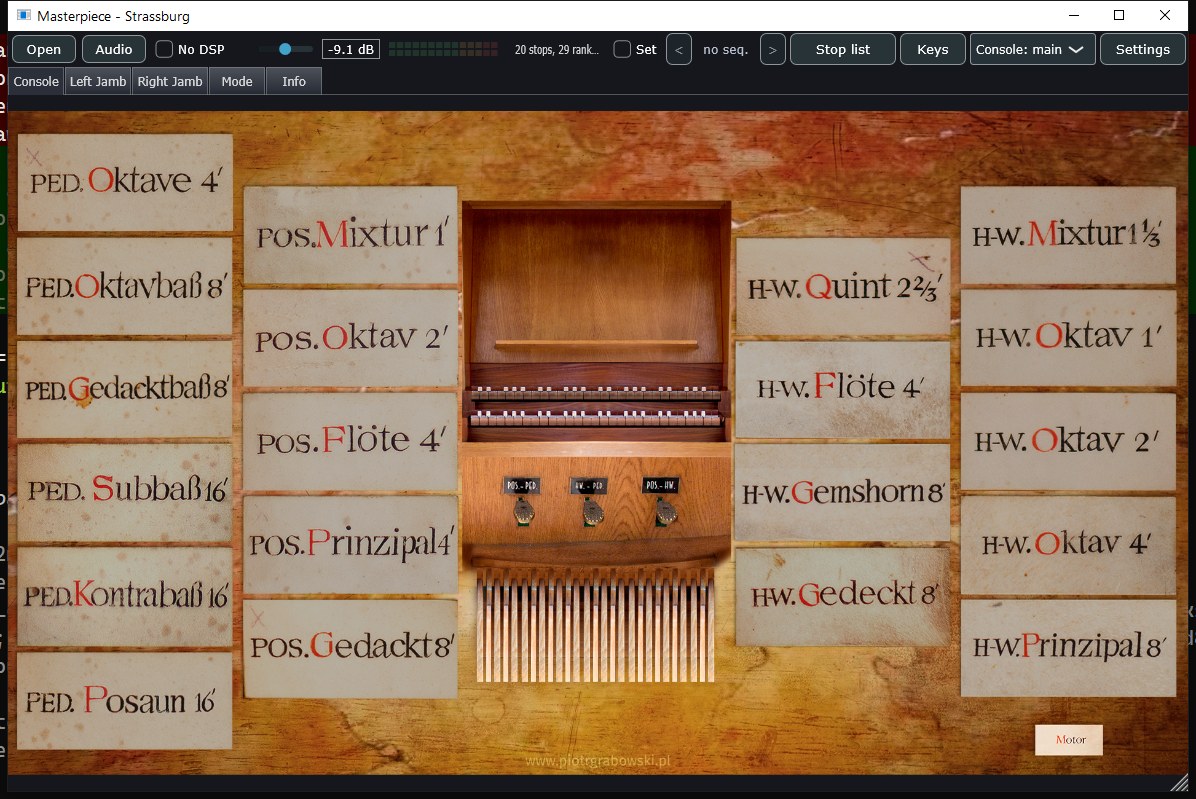
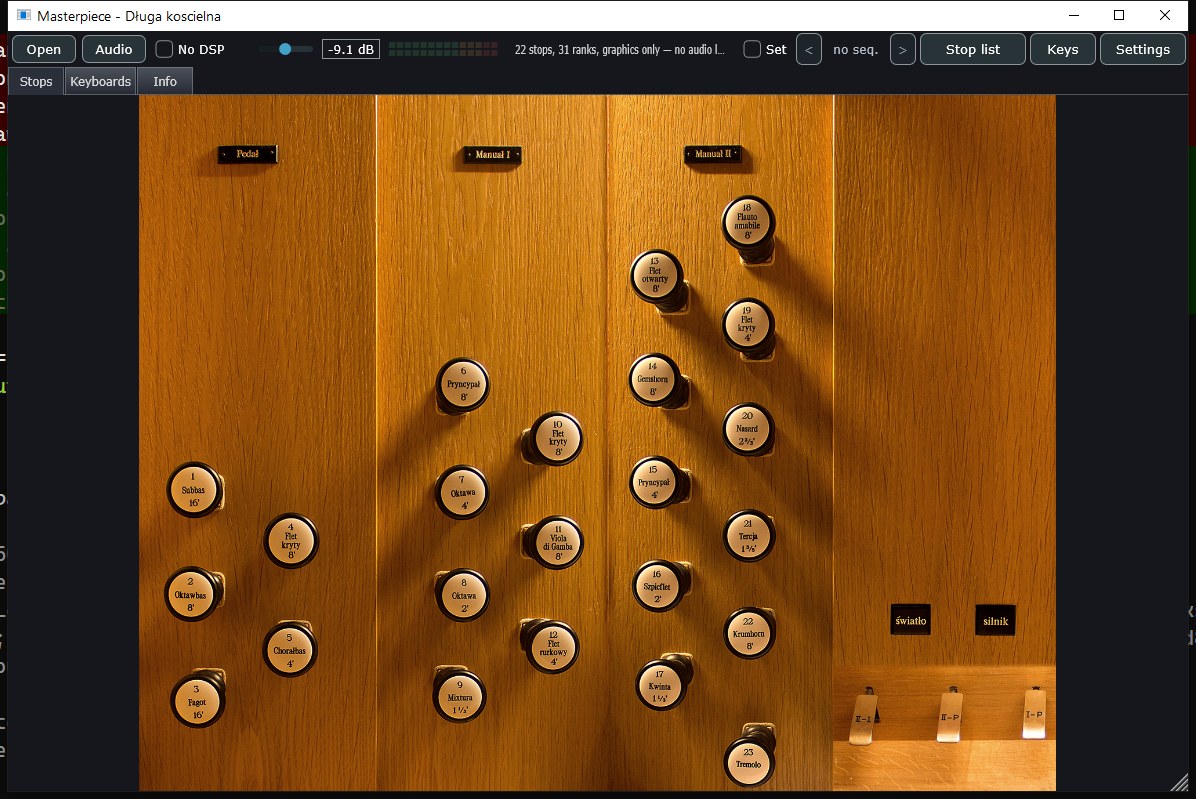
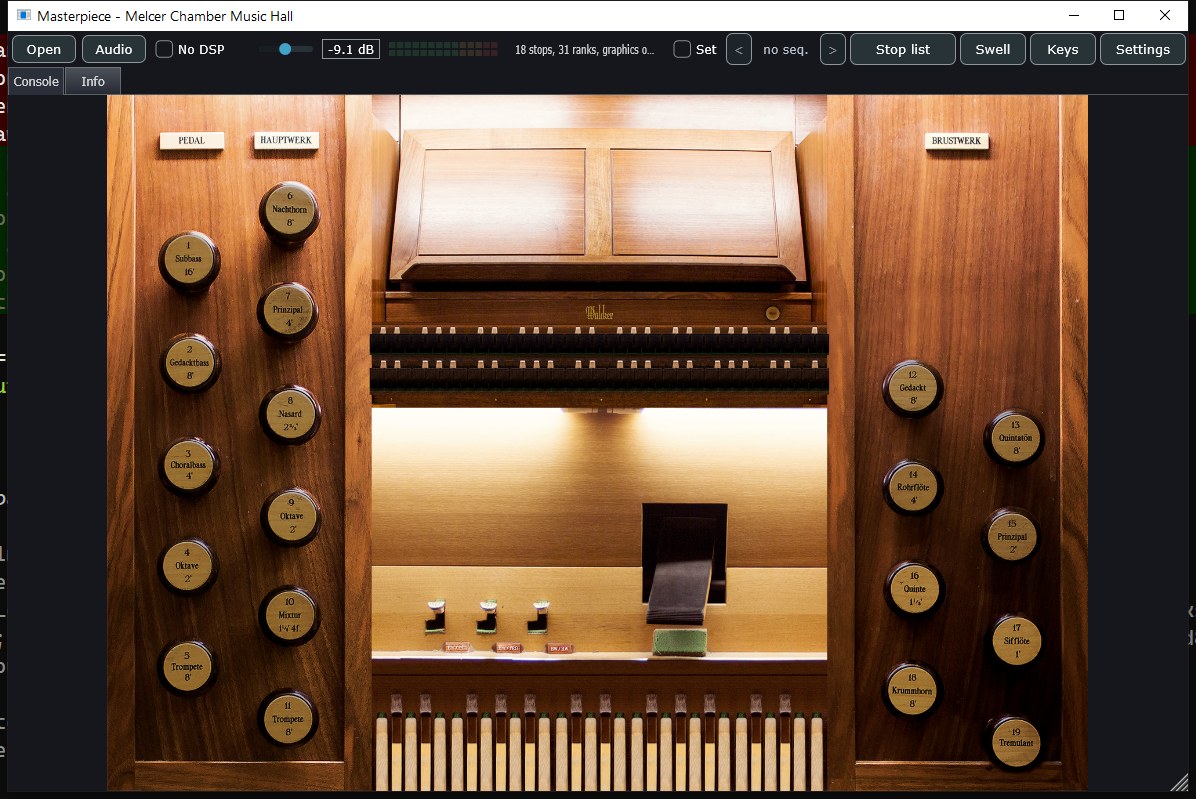
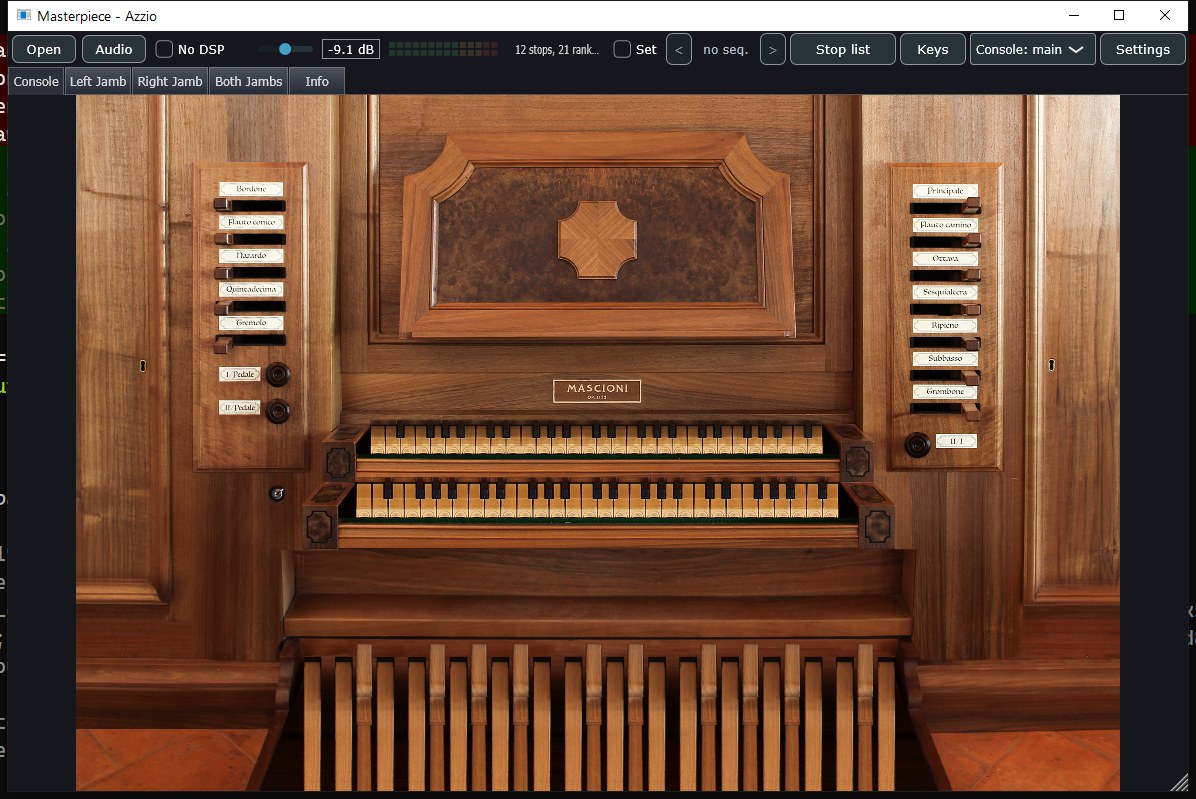
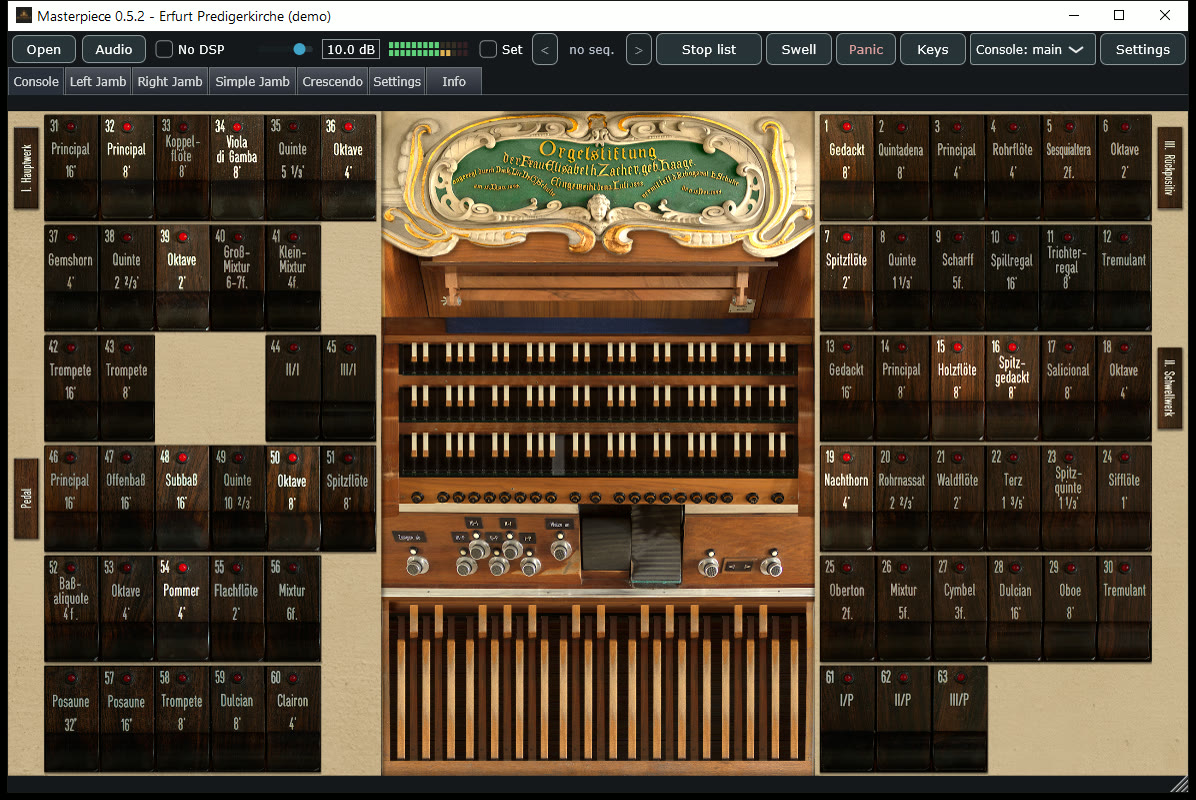
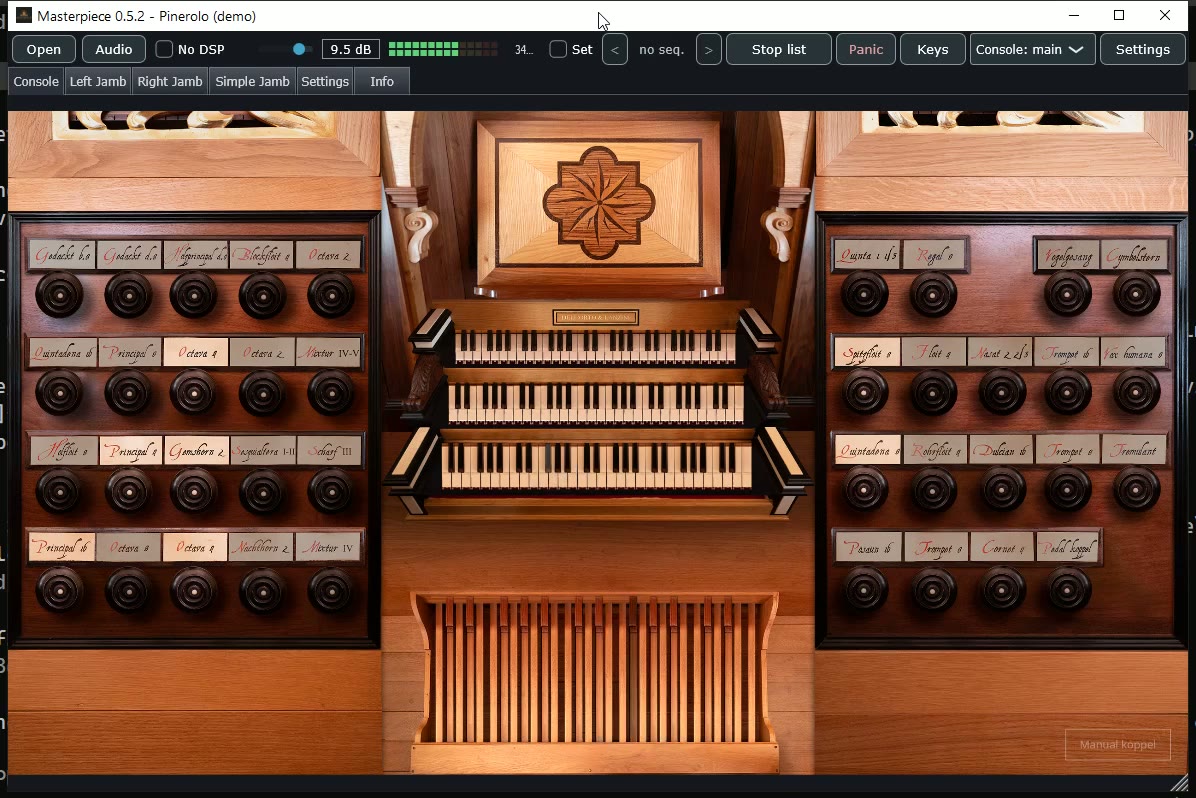
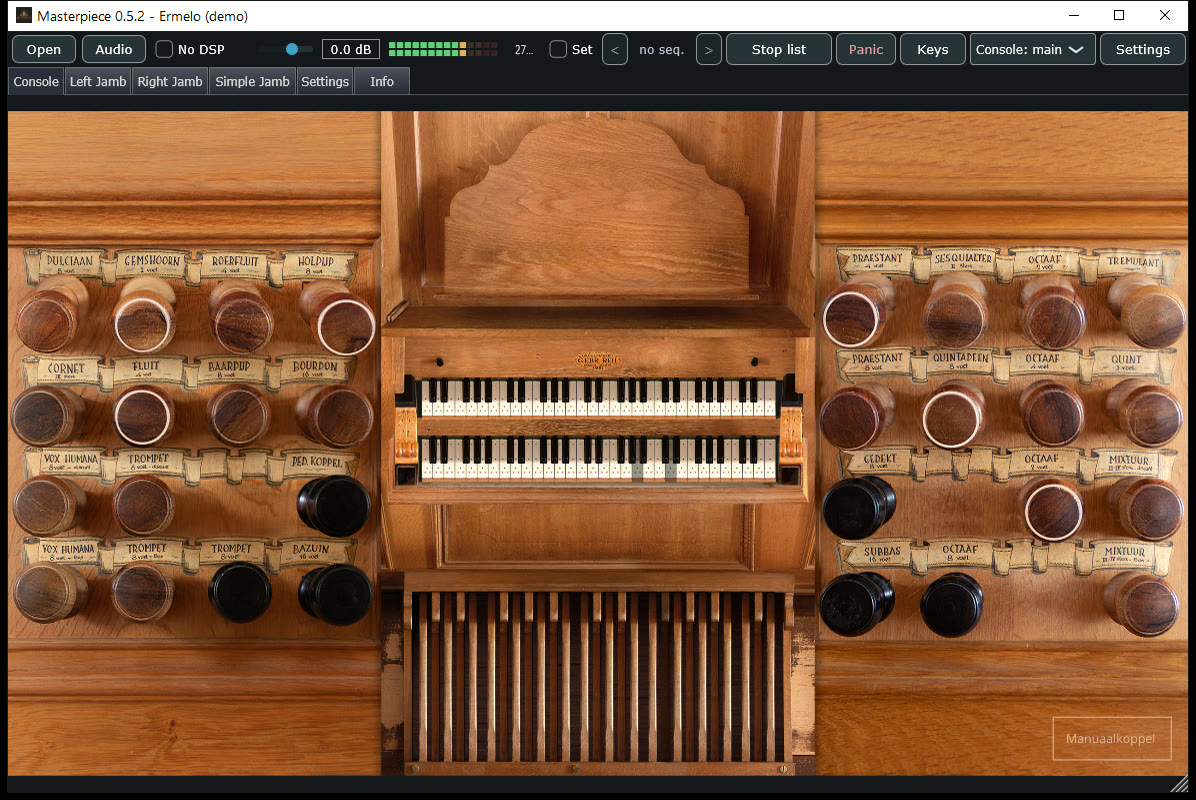
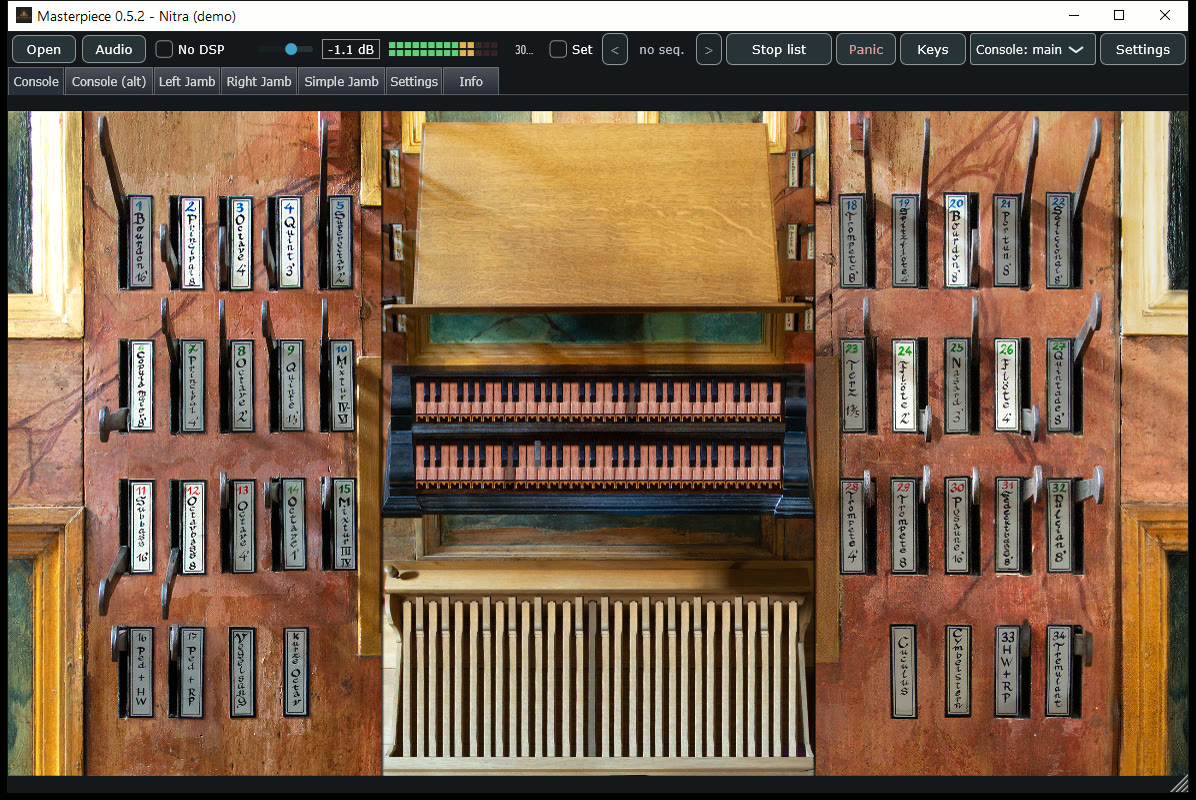
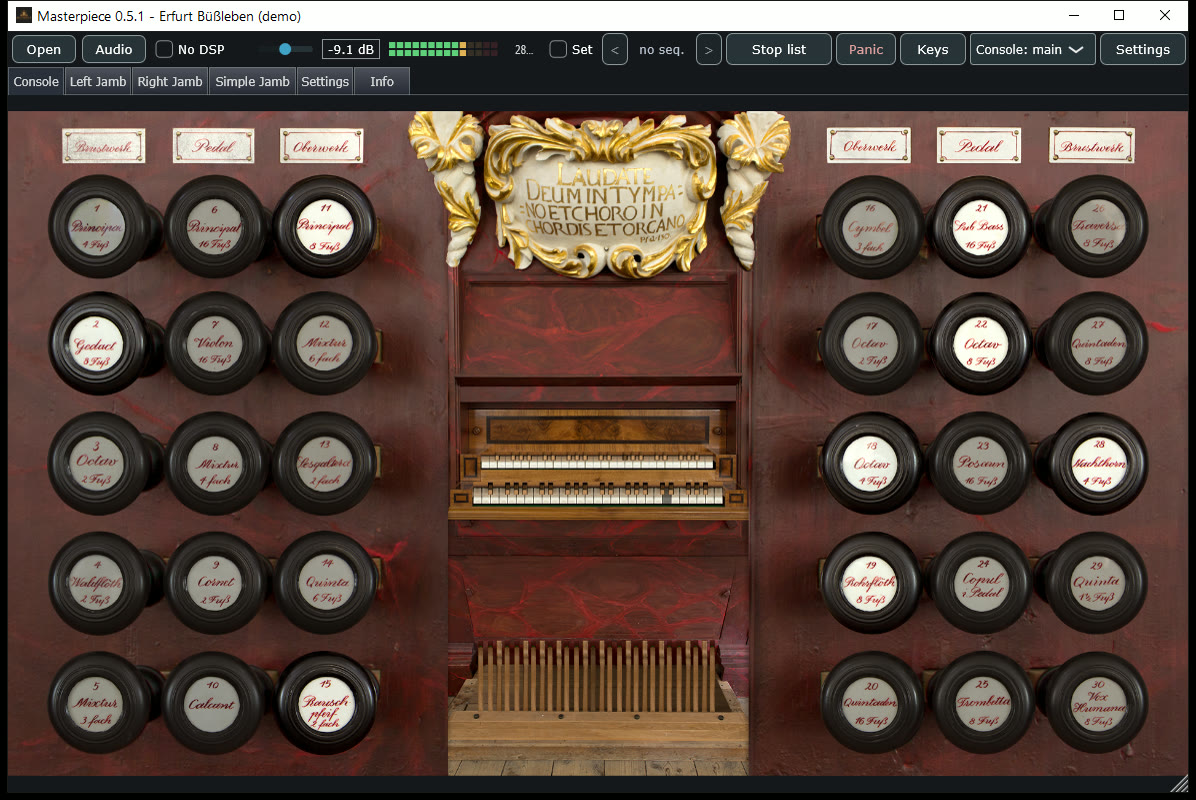
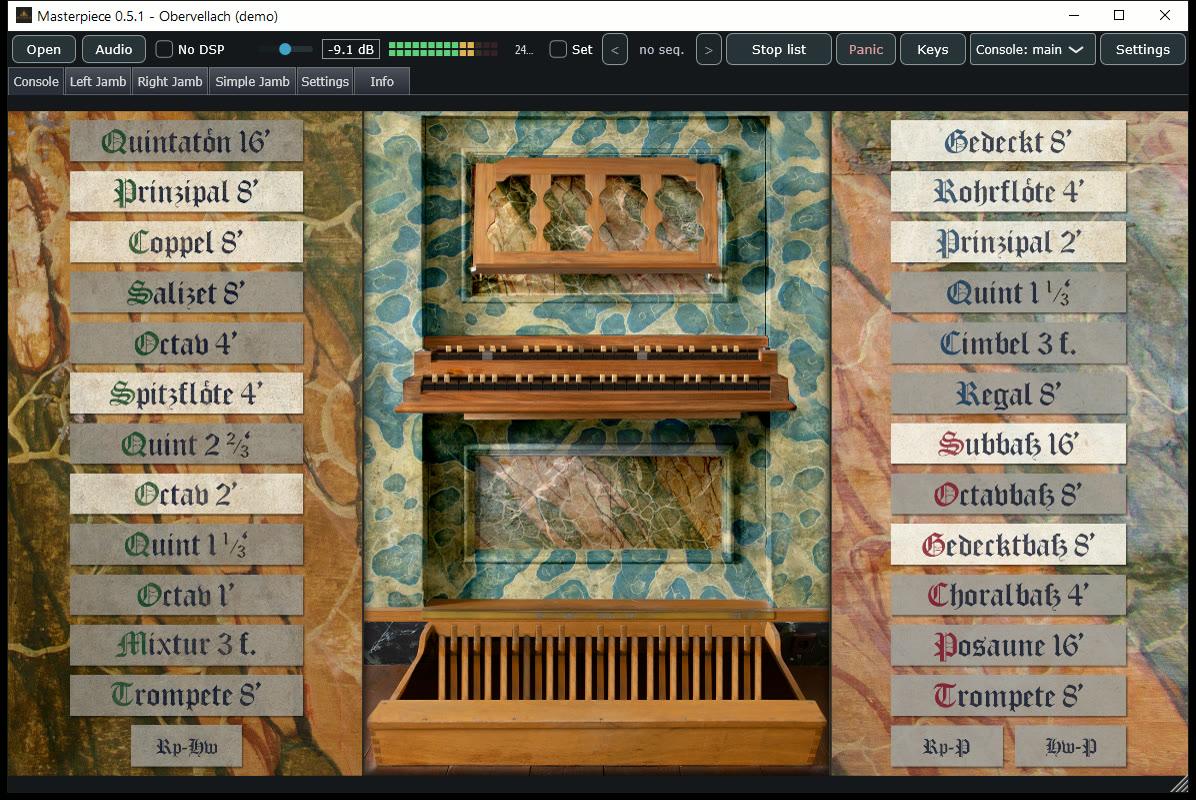
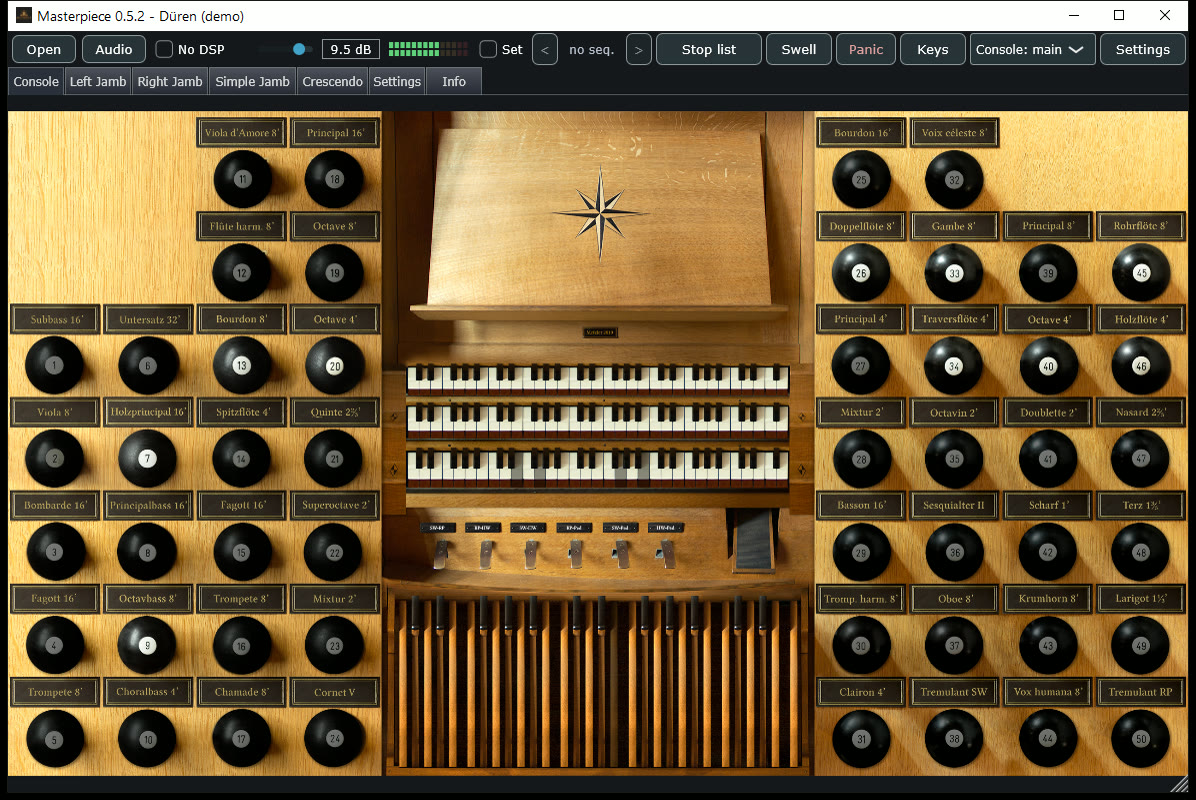
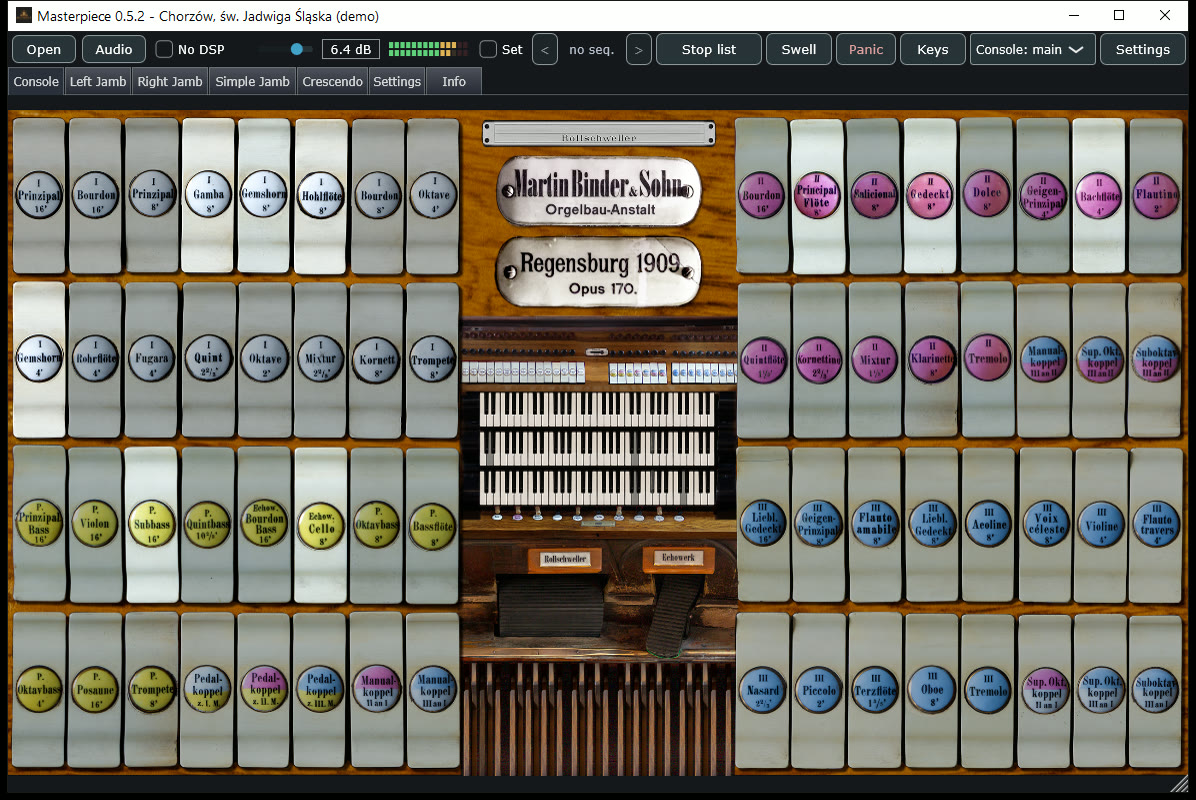
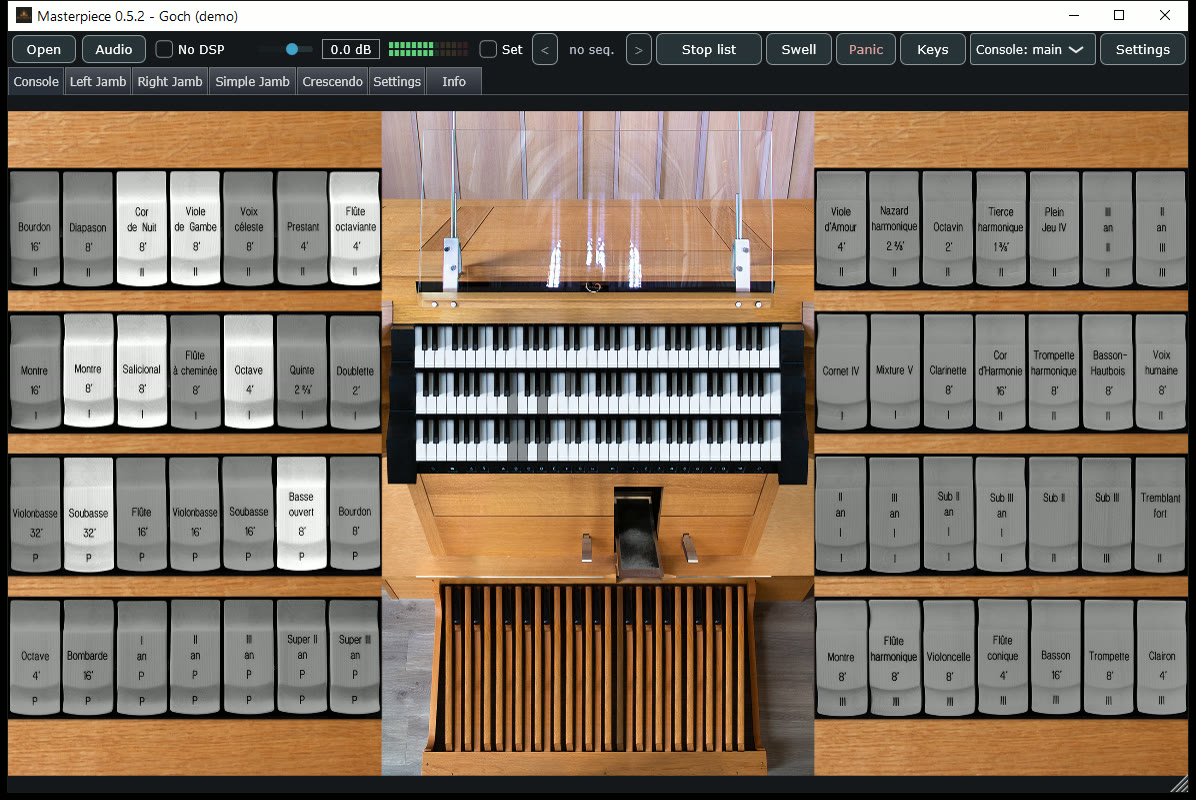
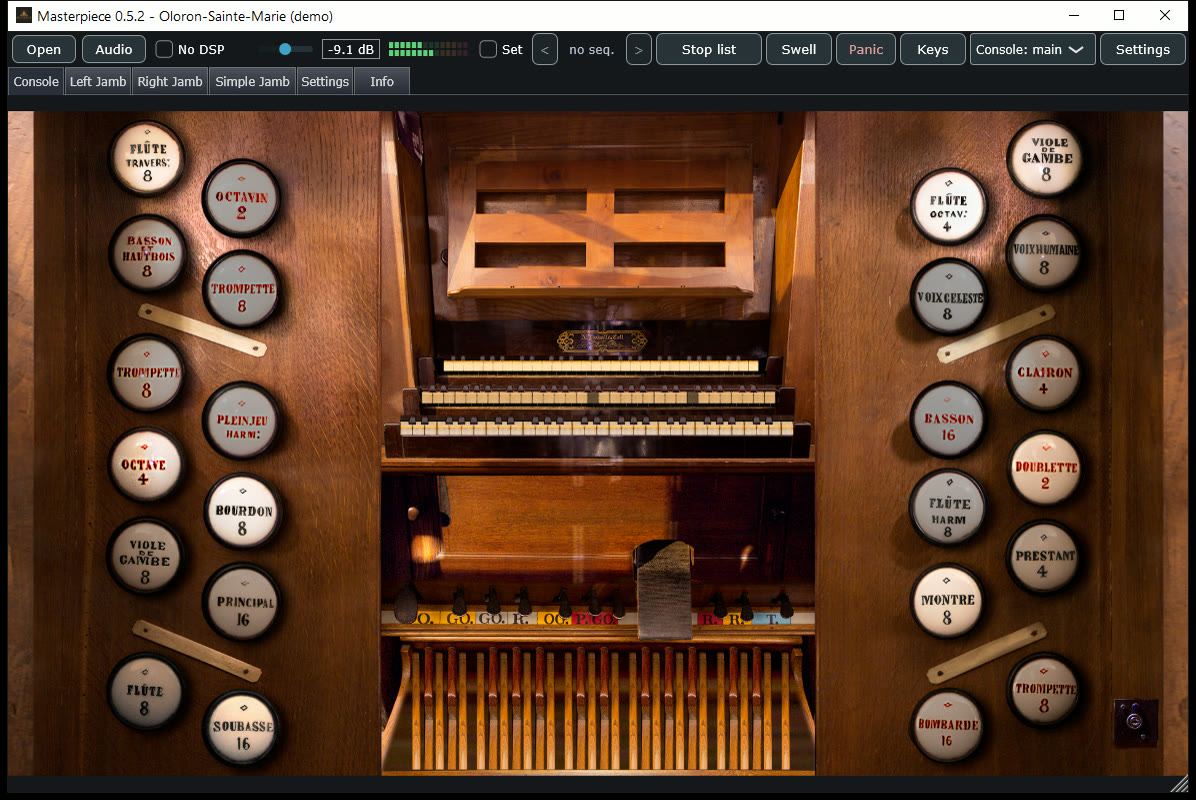
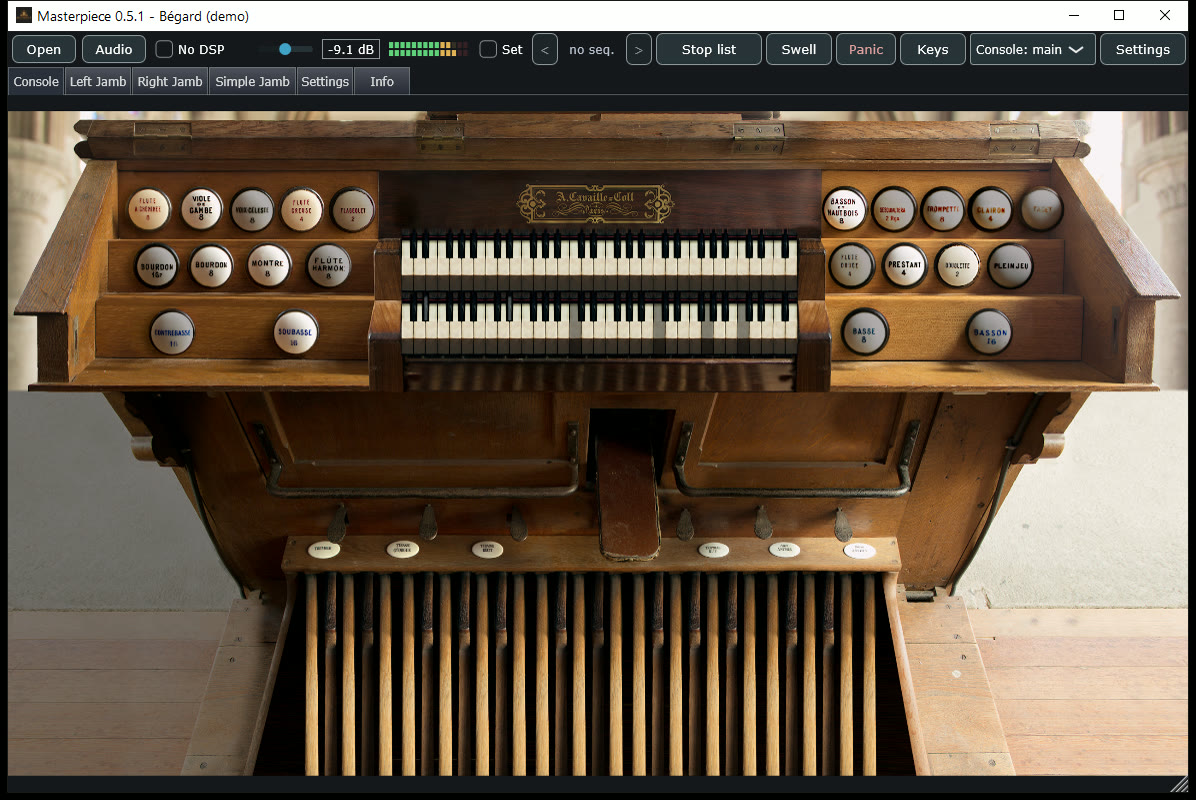
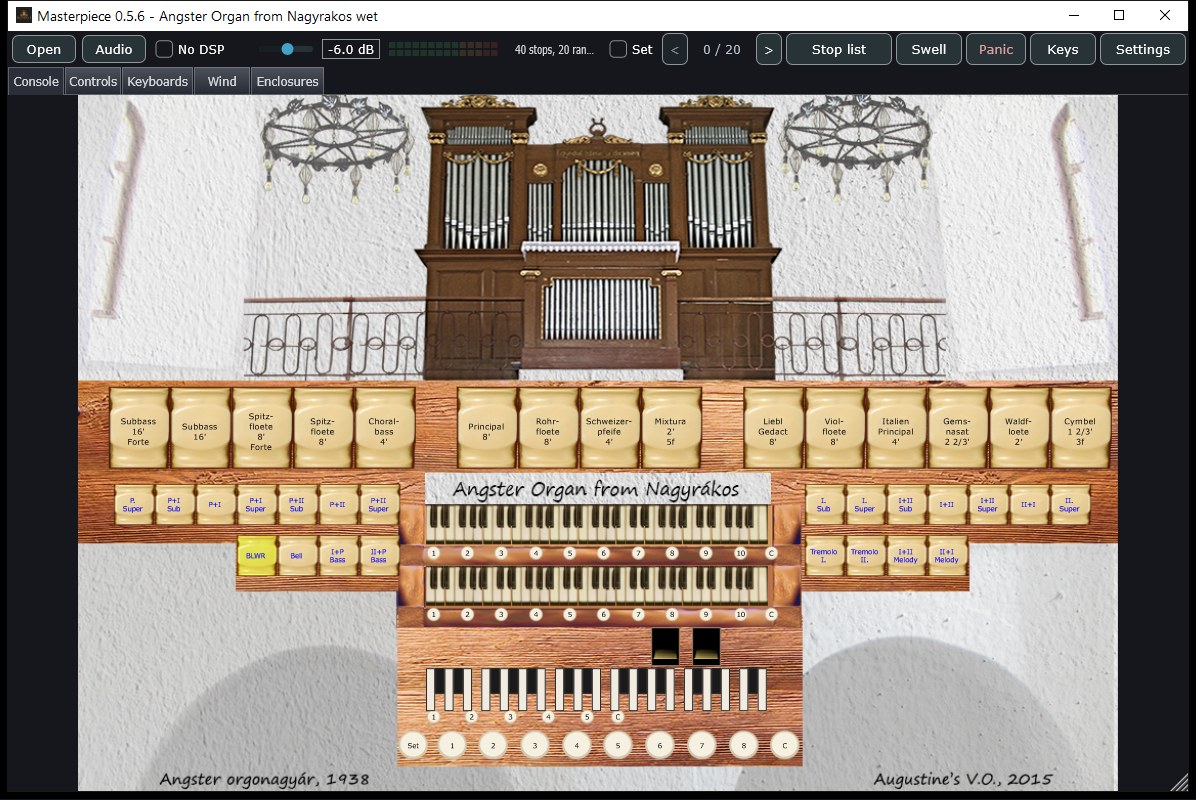
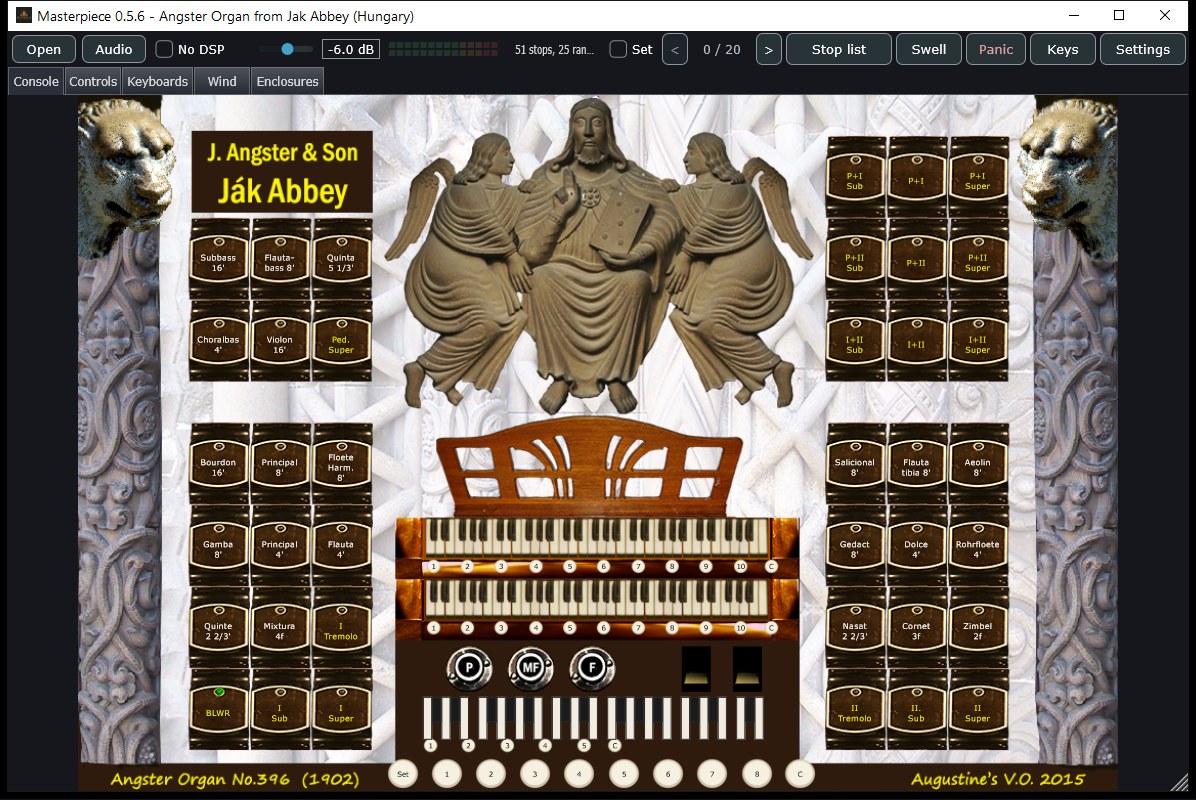
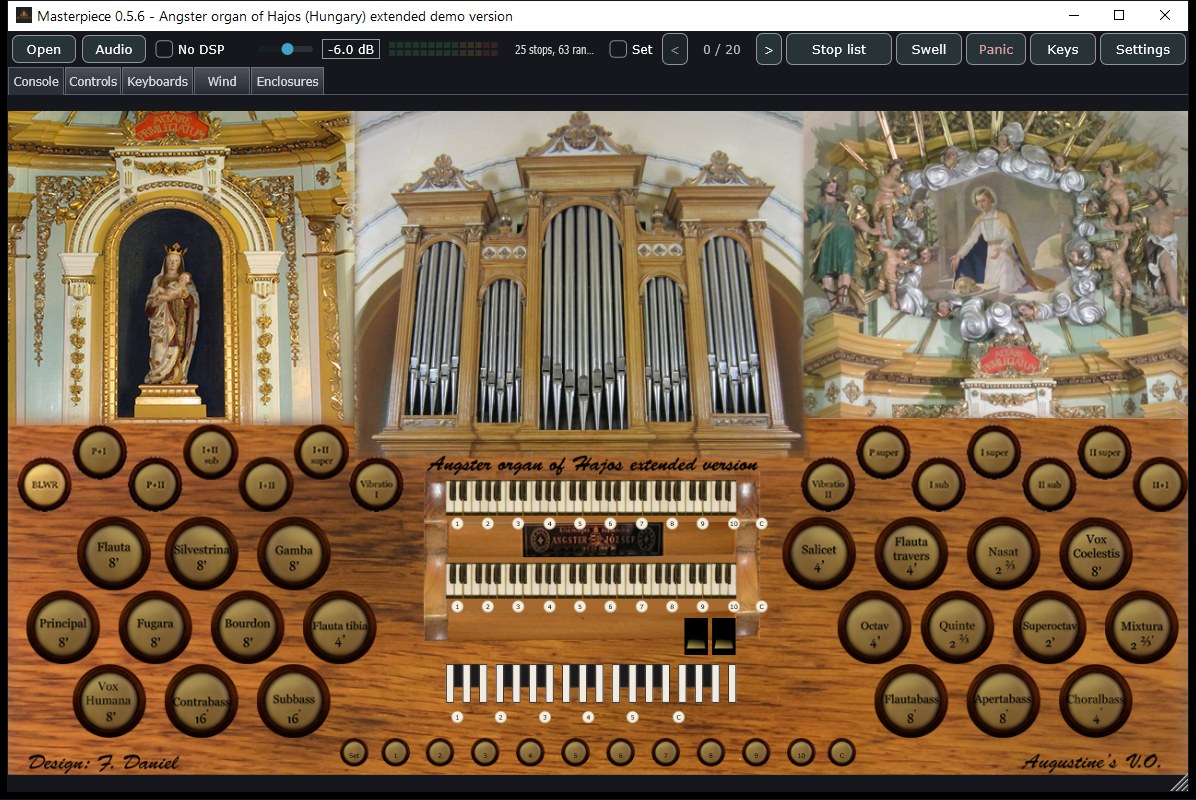
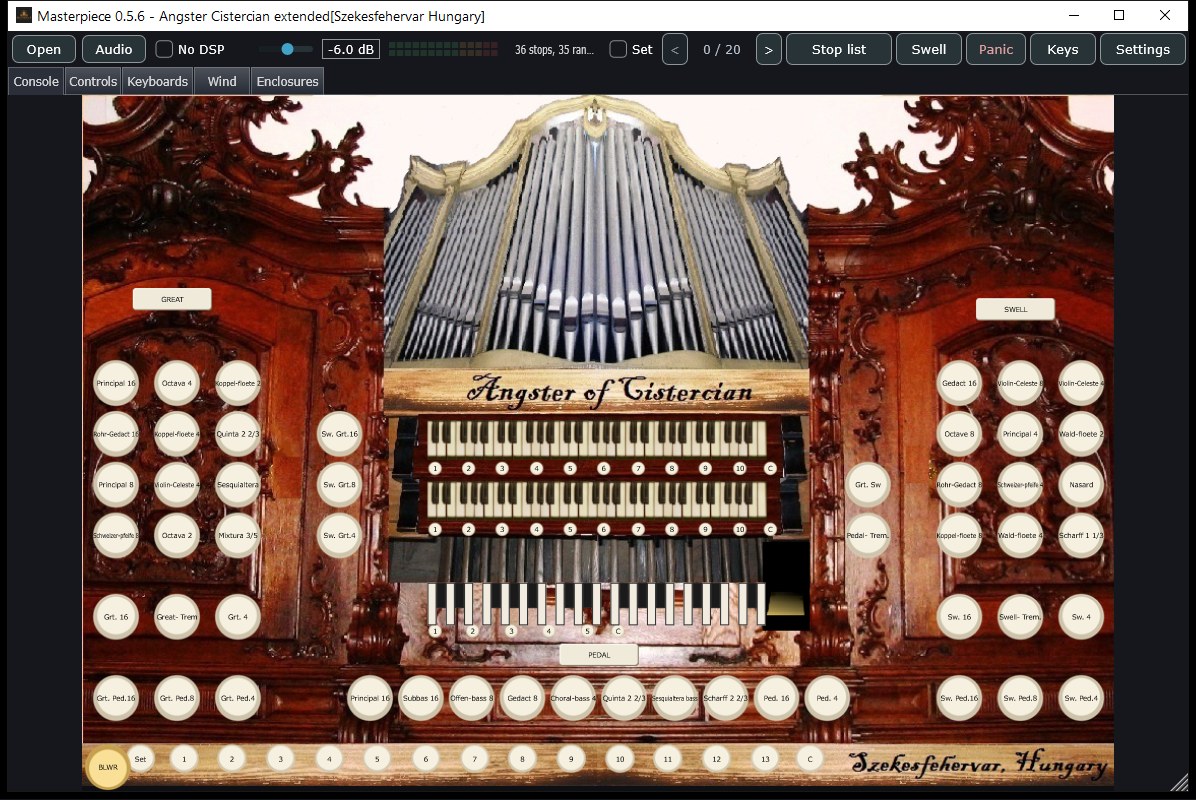
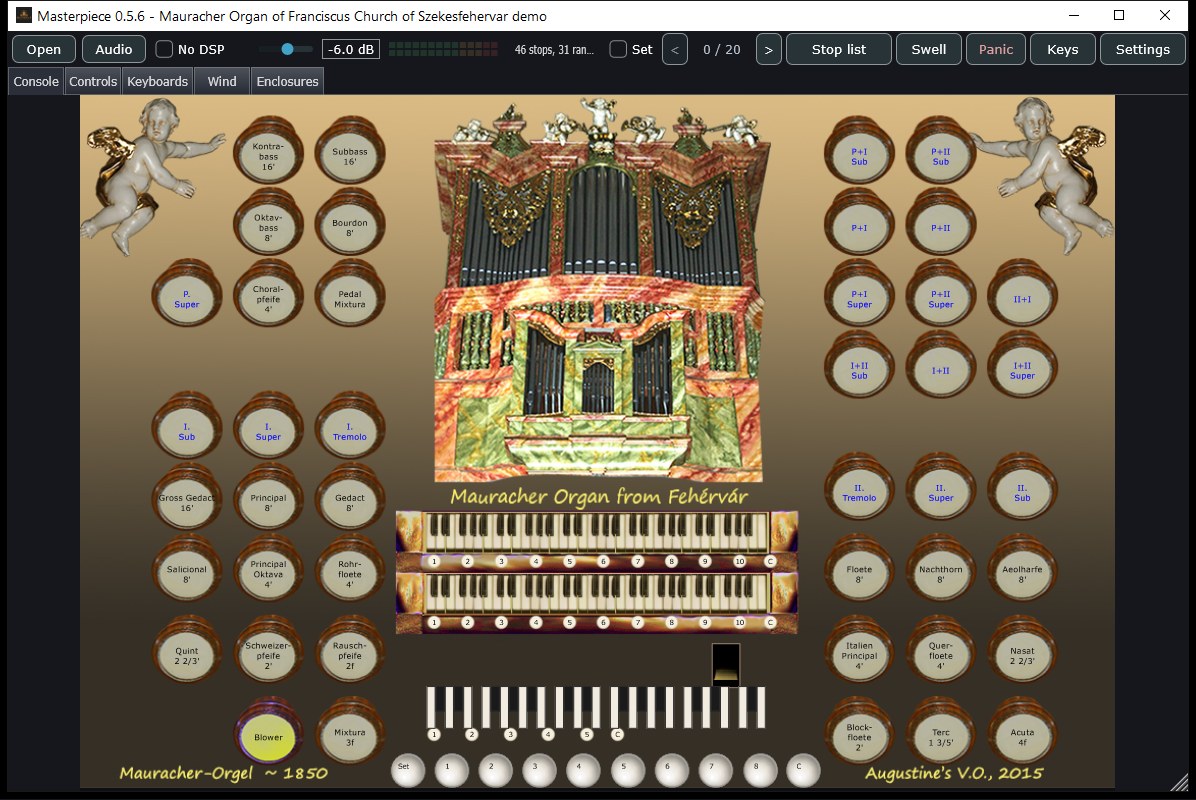
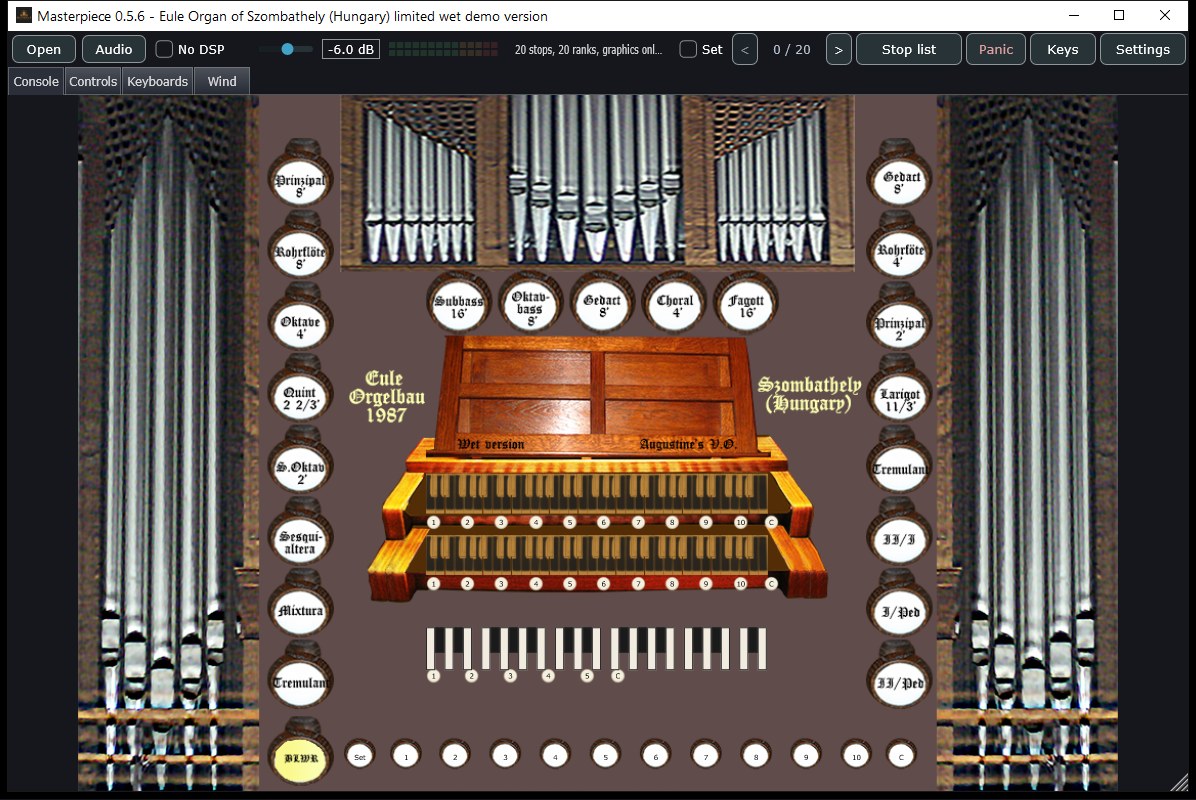
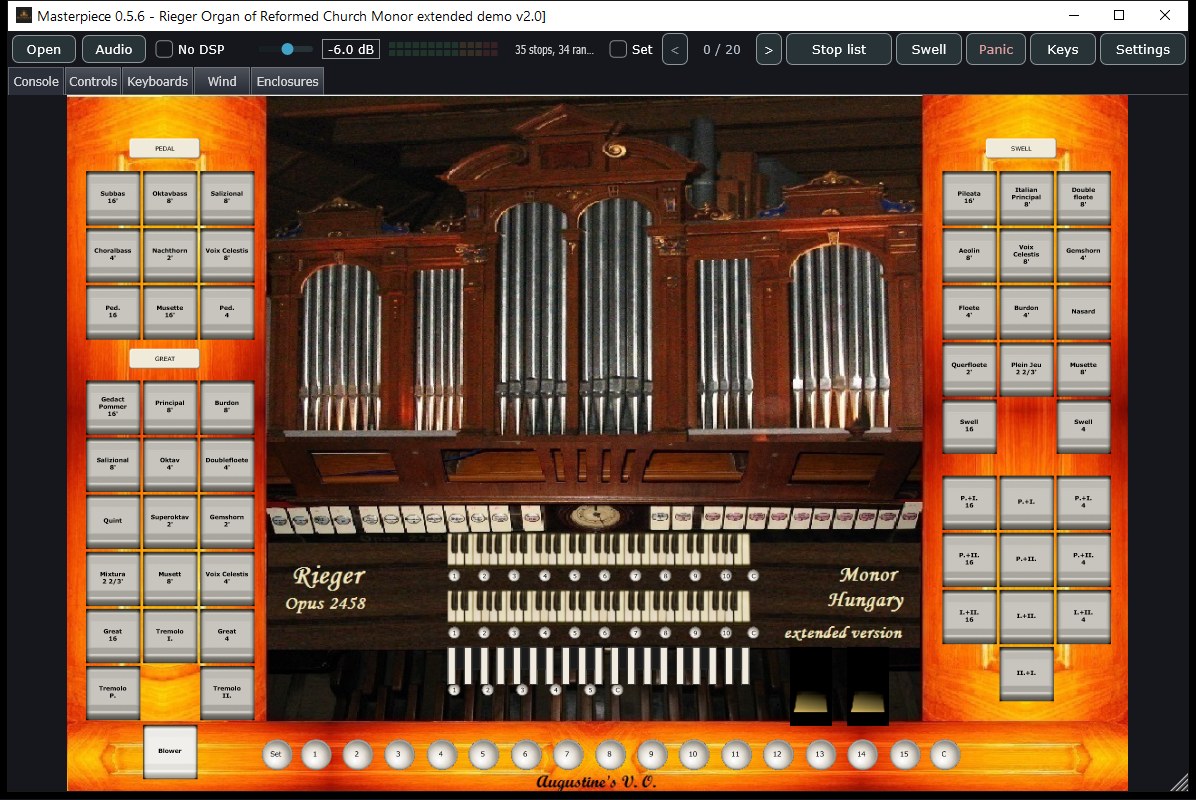
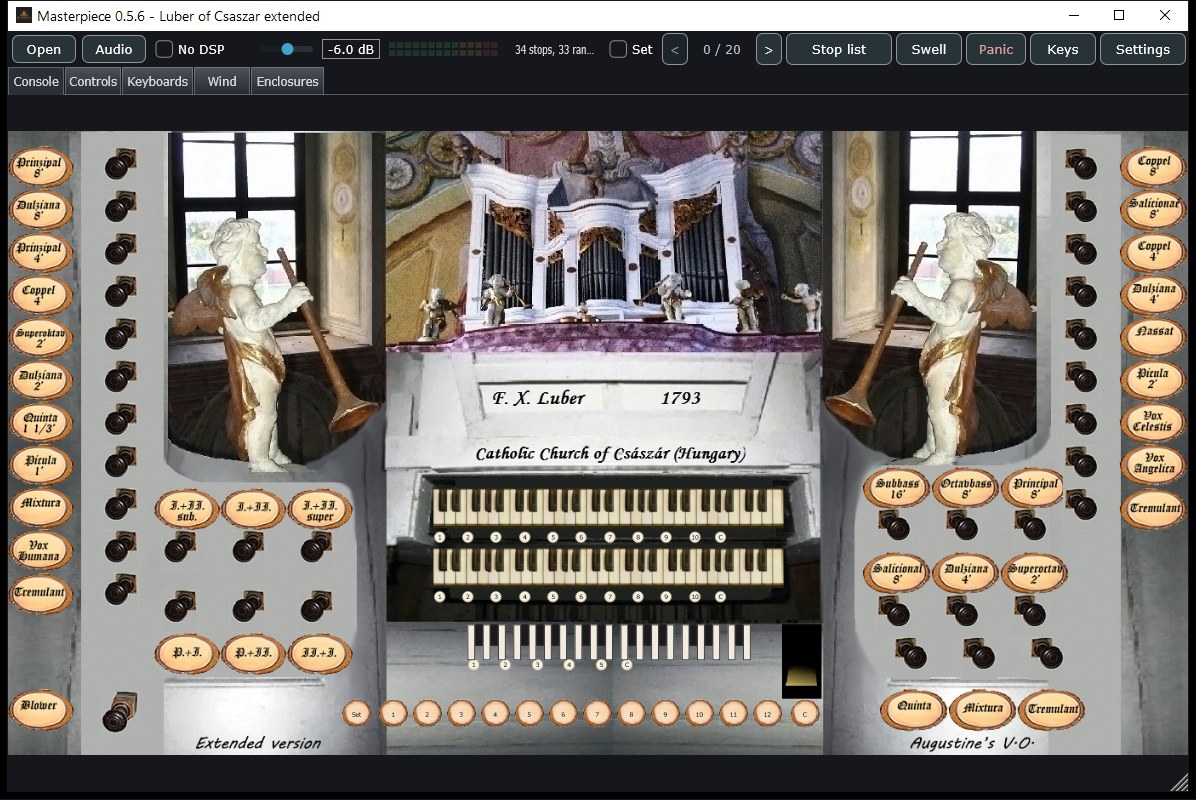
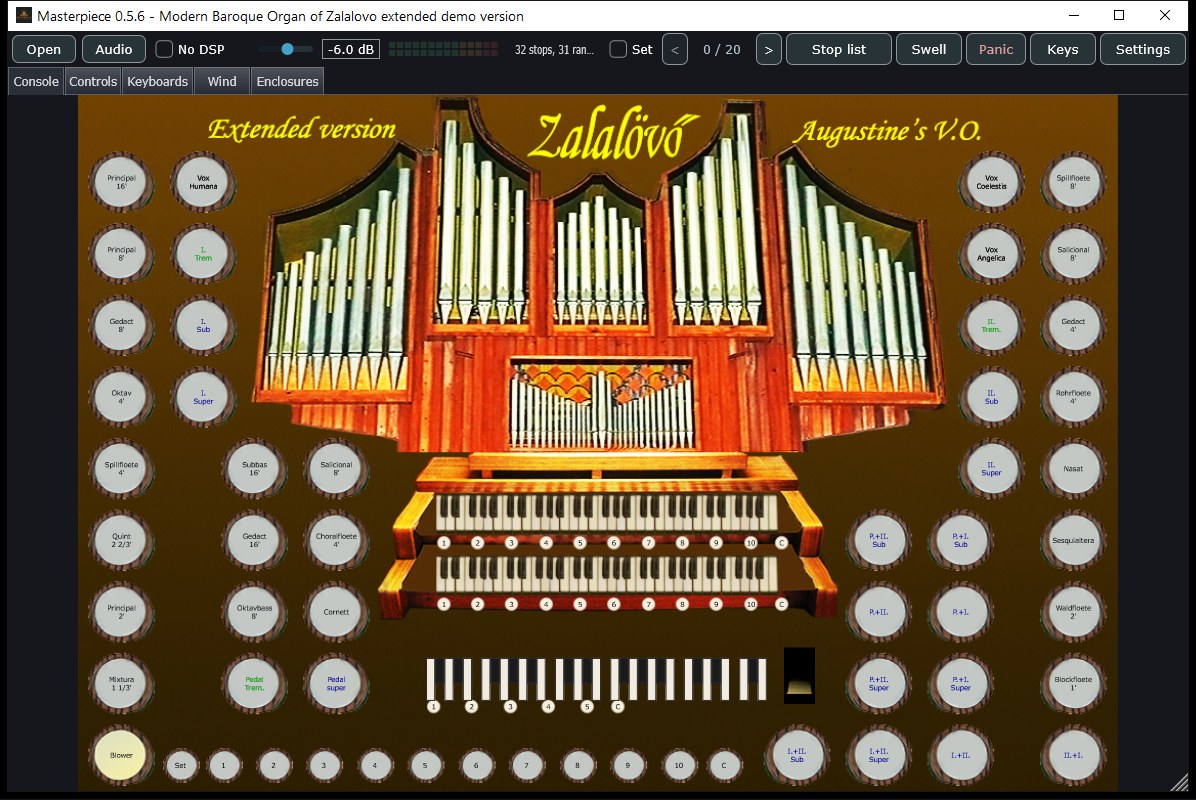
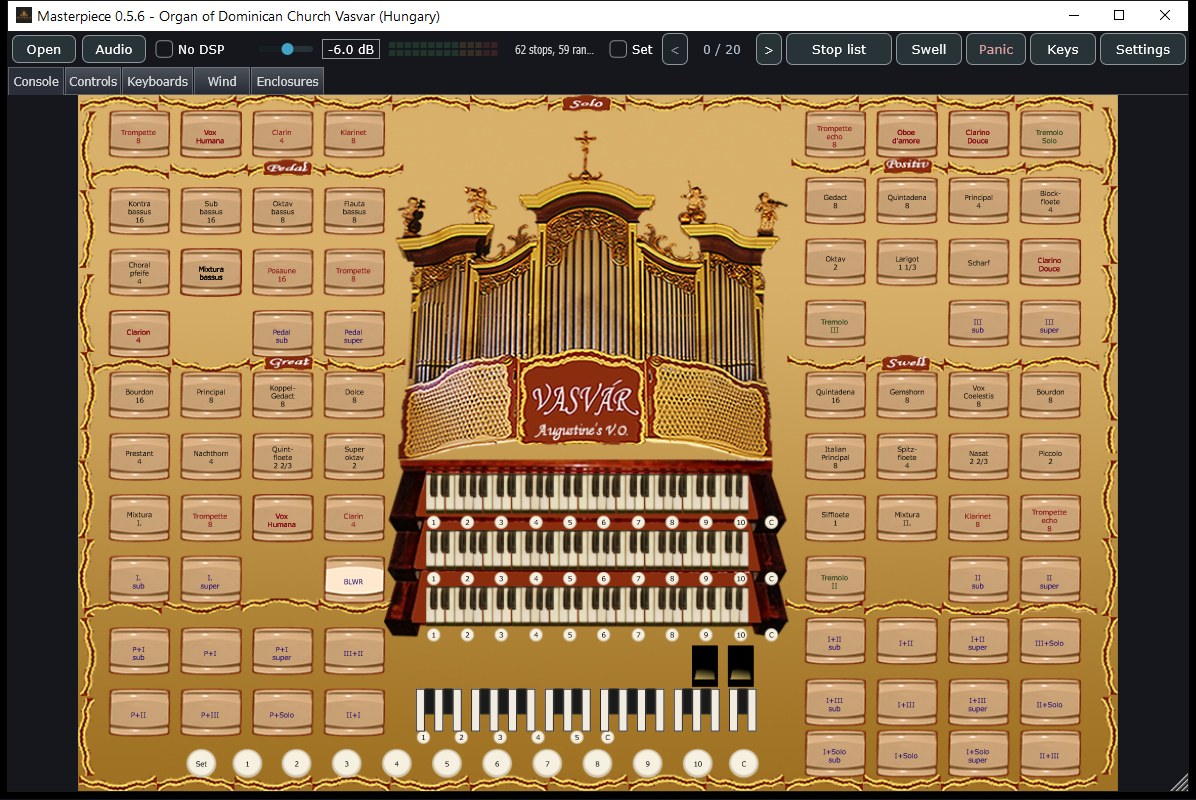
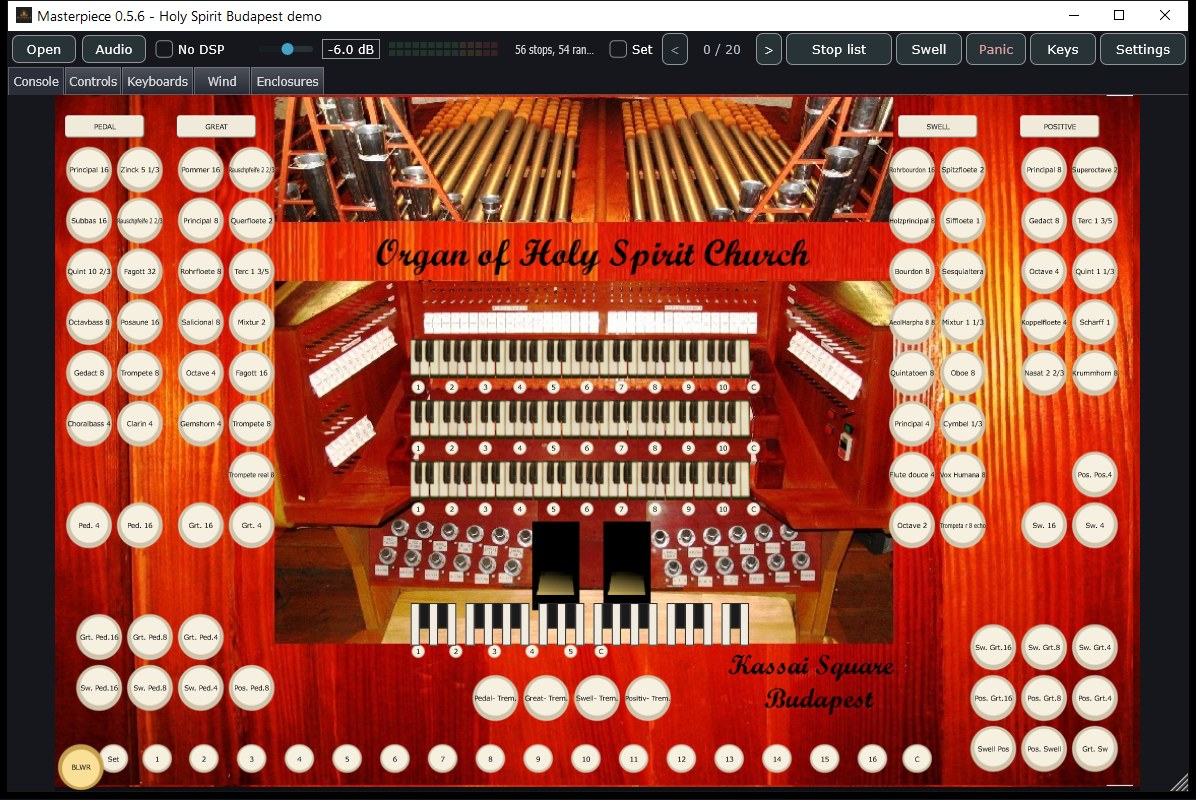
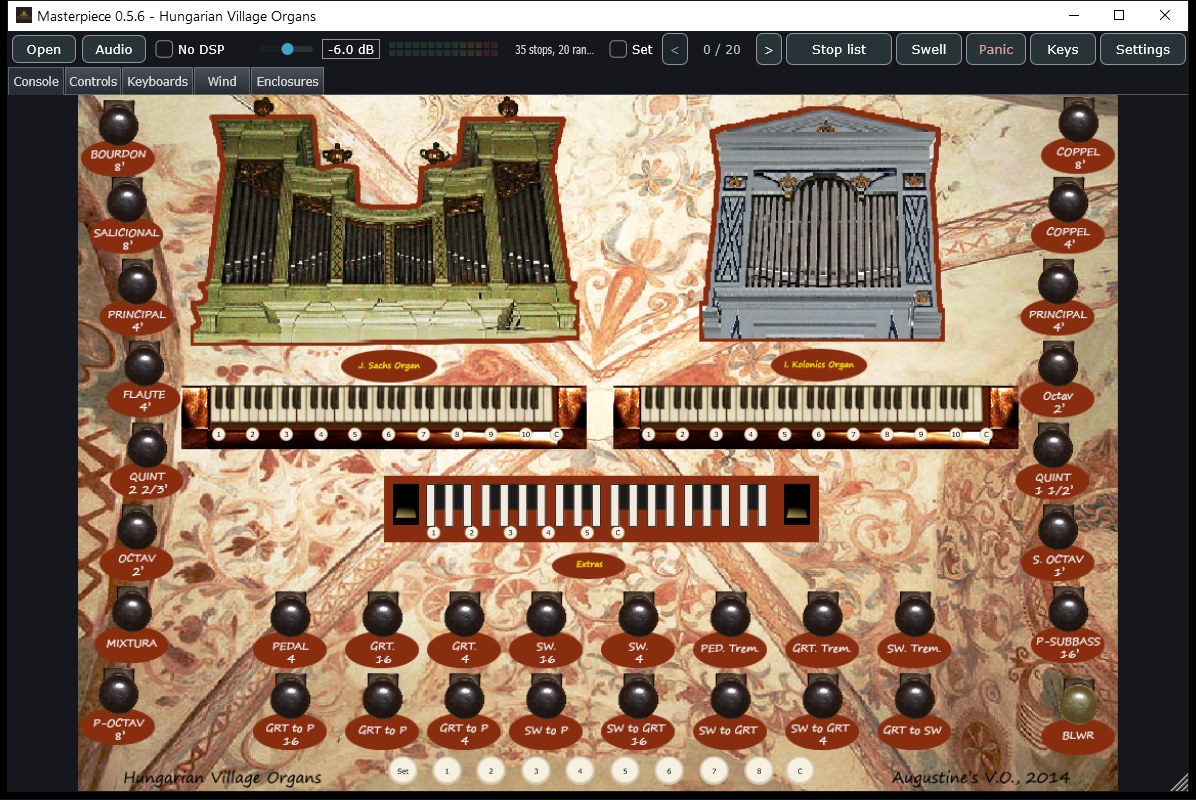
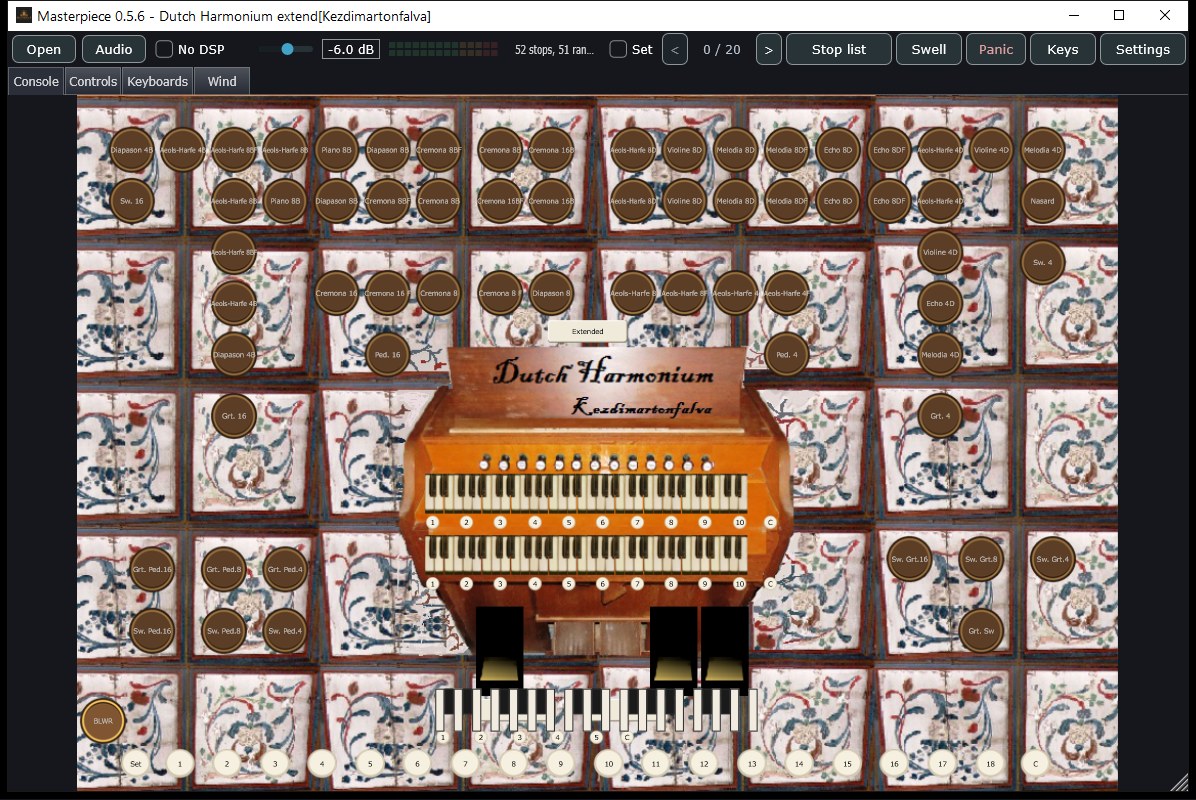
Each organ below is a freely published sample library, separate from the player. Twenty-three are produced by Piotr Grabowski and fourteen by Augustine’s Virtual Organs. Most of the newer ones are demonstration sets, which include only some of each organ’s stops. Full credits: attribution.
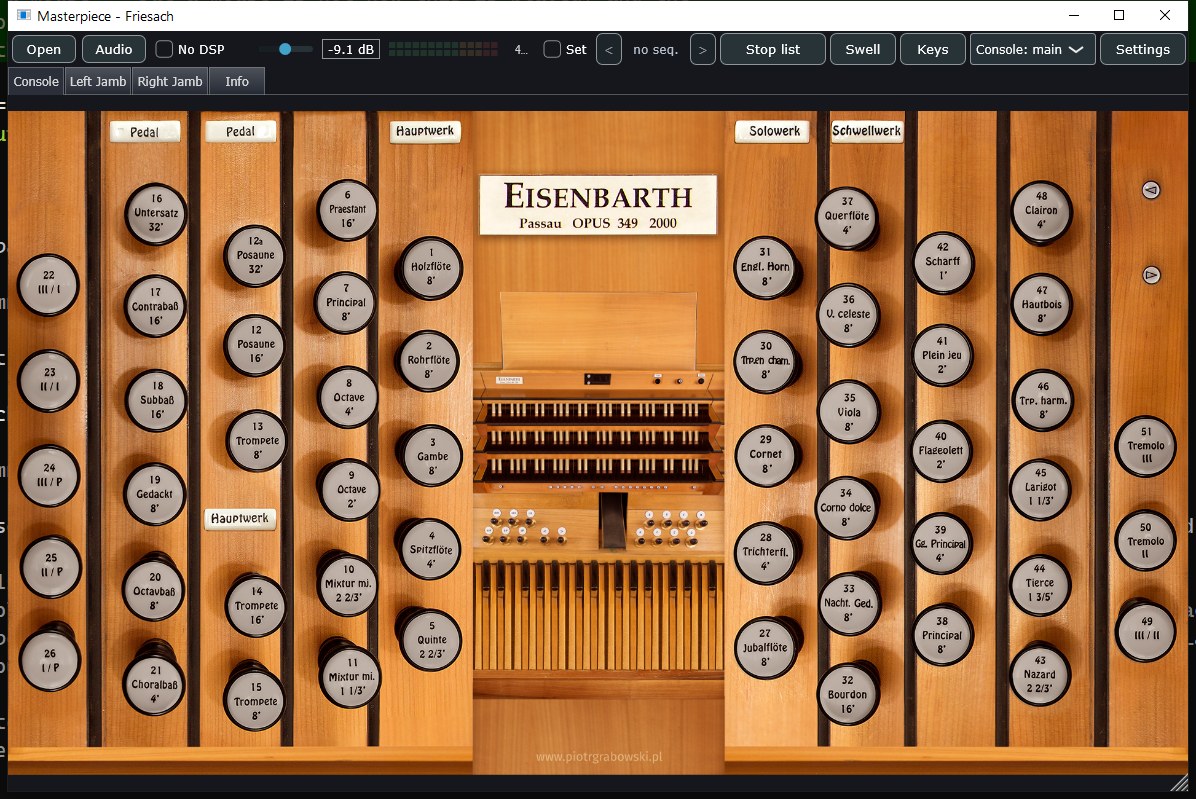
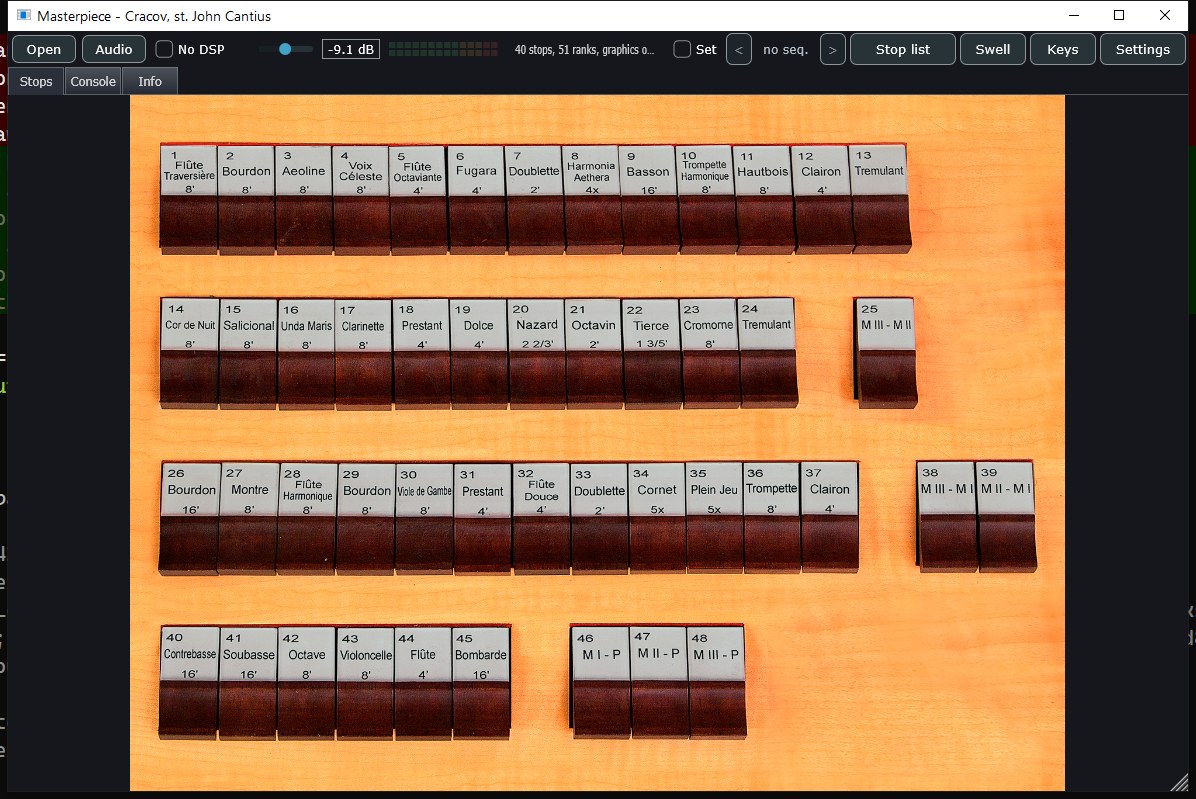
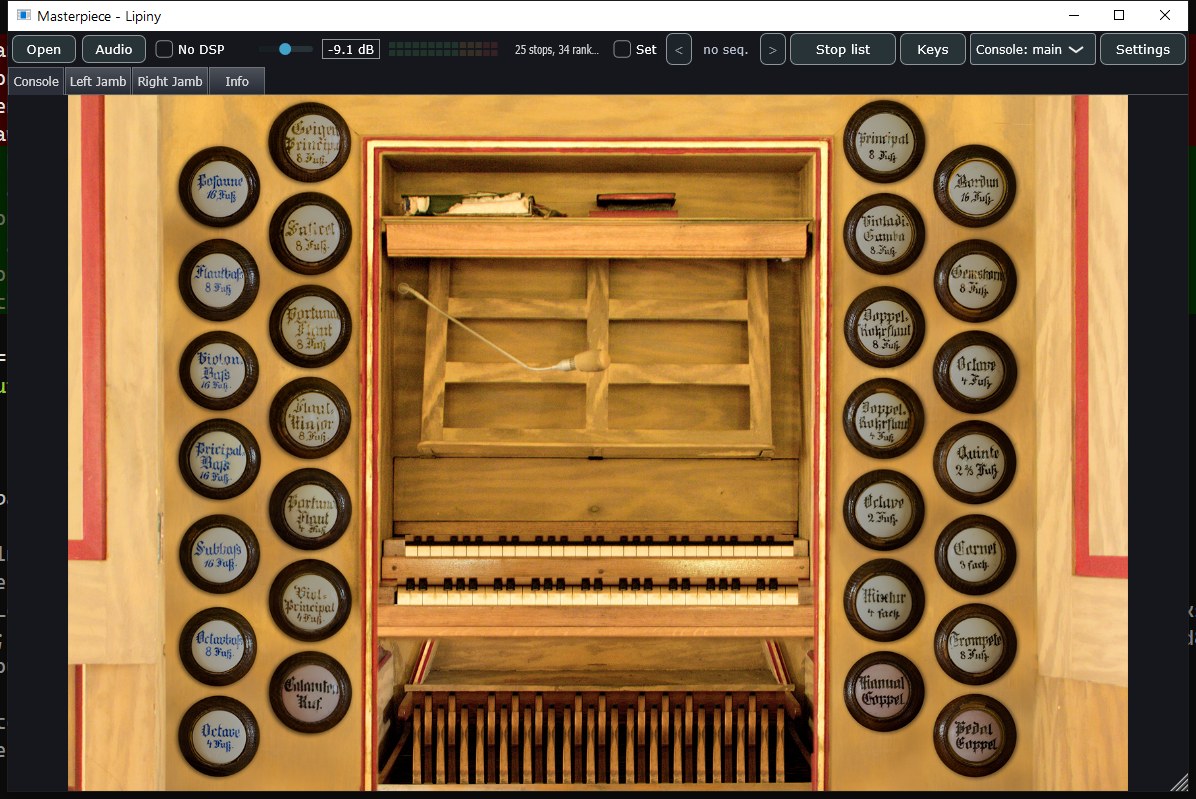
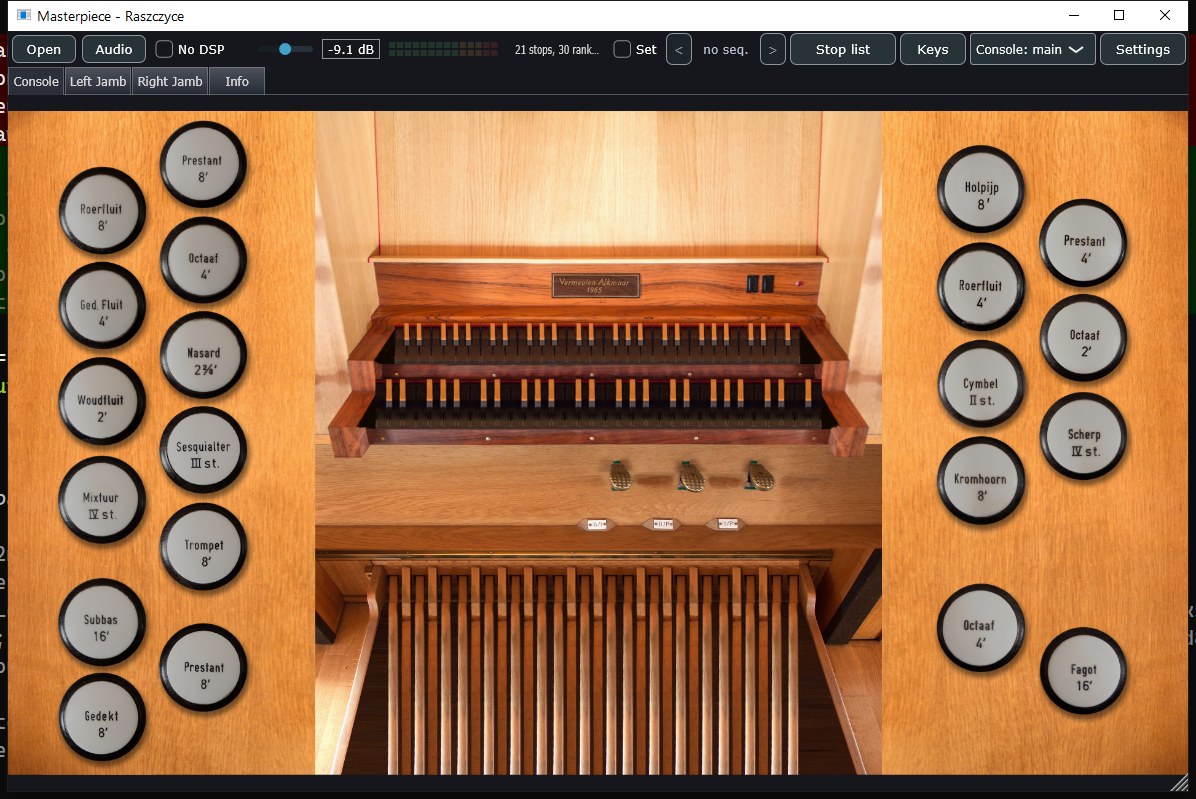
Installing
- Windows — run the installer; it adds a Start menu entry and removes from Settings → Apps. The portable
.zipneeds no installation and carries the VST3 plugin. - Debian, Ubuntu, Raspberry Pi OS —
sudo apt install ./masterpiece-0.7.1-linux-amd64.deb(use-arm64or-armhfon a Pi). The PC package also installs the plugins, to/usr/lib/vst3and/usr/lib/lv2. - macOS — unzip and move
Masterpiece.appto Applications. - Other distributions — the
.tar.gzarchives on the releases page.
Masterpiece runs on OpenPipes OS ARM and OpenPipes OS x86 alongside the engines those images ship with.
Support the project
Masterpiece is free and GPL-3.0-only. Development is funded entirely by the people who use it.
Source and documentation
- README — the full description, every screen, every instrument
- PERFORMANCE.md — memory and loading measurements, with the method
- COMMAND-LINE.md — headless and scripted use
- ATTRIBUTION.md — sample library producers, the recital programme and credits
- LICENCE — GPL-3.0-only
- Build workflow — Windows, macOS, Linux and Raspberry Pi on every commit
- github.com/Openpipes-org — the rest of the OpenPipes software and hardware